
A nice set of wine glasses can feel underdone in five seconds flat if they are handed over in bubble wrap, a supermarket bag or a box that does not fit. If you are working out how to gift wine glasses, the real job is not just choosing the glassware. It is making sure the gift looks considered, travels safely and arrives ready to present.
That matters whether you are putting together ten corporate gifts, wedding table favours, a retail gift set or a single pair of glasses for a special occasion. Good packaging does three things at once – it protects the glass, lifts the perceived value of the gift and saves you from last-minute packing problems.
How to gift wine glasses without making it look improvised
The quickest way to cheapen a premium glass is poor presentation. Wine glasses are delicate by nature, and they also tend to look awkward when packed in packaging that was designed for something else. A loose box, oversized tissue or a random gift bag can make the whole set feel pieced together.
A better approach is to start with the gifting format. Ask yourself whether the glasses are being given on their own, paired with a bottle, handed out at an event or displayed for retail sale. The answer changes the packaging decision. A single glass for a promotional event needs a different solution from a pair of stemmed wine glasses for a wedding gift or a branded set going to clients.
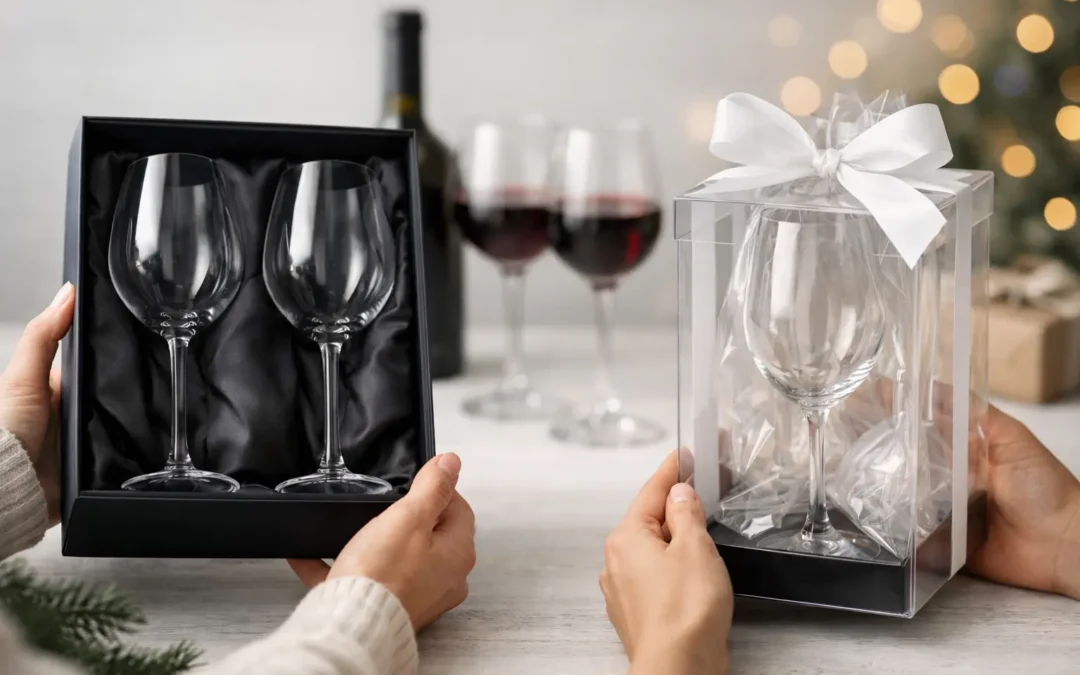
This is where purpose-built glassware packaging earns its keep. Black cardboard boxes give a more classic, premium presentation and work well for formal gifts, corporate use and weddings. Clear PVC or PET boxes suit display-led gifting where the shape, etching or branding on the glass is part of the appeal. Neither option is automatically better. It depends on whether protection, visibility or price point is doing the heavier lifting.
Start with the type of wine glass
Before you think about ribbon, inserts or gift tags, make sure you know exactly what you are packing. Stemmed red wine glasses, stemless wine glasses and oversized balloon-style glasses all create different packaging demands.
Stemmed glasses usually need more internal stability because the stem is the most vulnerable part. If the box is too roomy, the bowl and stem can shift during transport. Stemless glasses are generally easier to pack and often suit compact box formats, but they still need a snug fit to avoid chipping around the rim.
If you are gifting at scale, consistency matters even more. Mixed glass shapes can slow down packing and create presentation issues across a full order. For events, retail programs and promotions, it is usually more efficient to standardise the glass style first, then match the packaging to suit.
Single glass, pair or full set?
The number of glasses changes both the look and the practicality of the gift. A single glass can work for branded promotions, welcome packs or event merchandise. A pair often feels more complete for personal gifting, winery packs and client hampers. Larger sets can be effective for premium campaigns, but they are heavier, harder to handle and more expensive to freight.
There is a trade-off here. Bigger sets may appear more generous, but they also increase breakage risk and packing complexity. In many cases, a well-presented pair in a properly fitted gift box looks sharper and is easier to manage than a bulky multi-piece set.
Choose packaging that protects and presents
If you want to know how to gift wine glasses properly, choose packaging that does not force you to compromise between appearance and protection. You need both.
Black cardboard gift boxes are a strong all-rounder because they present neatly, stack well and suit a wide range of occasions. They are especially useful when you want a clean, professional look without overcomplicating the pack. For corporate gifting, weddings and formal events, that simple finish often works harder than decorative packaging that dates quickly.
Clear plastic gift boxes have a different advantage. They let the product sell itself. If the glassware has an attractive silhouette, printed logo, engraving or paired contents, transparency helps the recipient see the value straight away. They are often a good fit for retail shelves, cellar door packs and curated gifts where visual presentation is part of the buying decision.
What matters most is fit. A good box should hold the glass securely and look proportionate. Too tight, and packing becomes frustrating. Too loose, and the gift feels unstable and unfinished.
Inserts and internal support
A wine glass box should not rely on hope. Internal support makes a real difference, particularly for stemware and for gifts that will be transported, posted or stacked before handover.
If the glasses are part of a broader gift set, make sure the internal layout keeps each item from knocking against the next. A bottle and a glass in the same pack can look excellent, but only if the contents are restrained properly. Without that, you are building in risk from the start.
For business buyers, this is often where ready-made packaging saves time. Instead of trying to adapt general-purpose boxes, you can use packaging designed for glassware dimensions and gifting use. It removes guesswork and gives a more consistent finish across every unit.
Match the packaging to the occasion
Good gifting is not one-size-fits-all. The right box for a wedding favour may not suit a promotional campaign or a retail display.
For weddings, presentation is usually front and centre. Couples and planners tend to want a neat, polished result that is easy to place on tables, pack into welcome bags or distribute to guests. A well-fitted box in black or clear finishes can keep the look tidy while protecting the glassware during setup and bump-out.
For corporate gifting, practical presentation usually wins. The packaging needs to look professional, align with the brand and arrive in one piece. It also needs to be efficient to order and assemble, particularly when you are sending gifts to multiple locations or managing a campaign deadline.
For retail or cellar door use, visibility can matter more. If customers are buying on display, clear packaging helps show the product without needing to open the box. If the gift set includes custom branding or decorative print on the glass, that visibility becomes part of the sale.
When custom packaging makes sense
Not every project needs custom packaging. If you are ordering in smaller quantities or need a quick turnaround, a ready-made gift box is often the most practical option. It keeps costs under control and gets the job done cleanly.
Custom packaging starts to make more sense when volume increases, branding is important or the glassware format is less standard. Large corporate orders, promotional campaigns, winery gift programs and event merchandise often benefit from a tailored solution because consistency, brand presentation and pack efficiency all matter more at scale.
There is also a cost-versus-impact decision here. Custom work can improve presentation and create a more ownable branded result, but it is not always necessary. If your main goal is safe, professional gifting on a tight timeframe, standard packaging may be the smarter commercial choice.
Small details that make the gift feel premium
Once the box is right, you do not need to overdo the finishing touches. Clean presentation usually beats cluttered presentation.
A gift message, branded sleeve or simple insert card can add context without making the pack feel busy. If you are assembling gifts for clients or event guests, consistency matters more than decoration. Every pack should look the same, close properly and be easy to carry.
It is also worth thinking about handling. Will the gift be posted, handed out at a venue, displayed on shelves or loaded into cars after an event? A box can look great on a table and still be impractical if it opens too easily or does not travel well. Presentation has to hold up in the real world.
For buyers managing volume, that is often the difference between a gift that photographs well and one that actually works. Specialist suppliers such as WineBox help bridge that gap by offering packaging that is built for both appearance and function, without turning the packing process into a project of its own.
Common mistakes when gifting wine glasses
Most problems come back to three issues: the wrong box size, the wrong packaging style for the occasion and leaving packaging decisions too late. Any one of those can lead to breakages, messy presentation or rushed substitutions.
Another common mistake is focusing only on the glassware itself. Premium glasses do not automatically create a premium gift. If the packaging looks flimsy or improvised, the overall impression drops fast.
The better approach is simple. Decide the occasion, confirm the glass dimensions, choose a box that fits properly and think through how the gift will be transported and presented. That gives you a result that feels planned, not patched together.
Wine glasses are a popular gift because they are useful, versatile and easy to pair with bottles, hampers and event themes. Give them in the right packaging, and they feel more valuable before the box is even opened.