
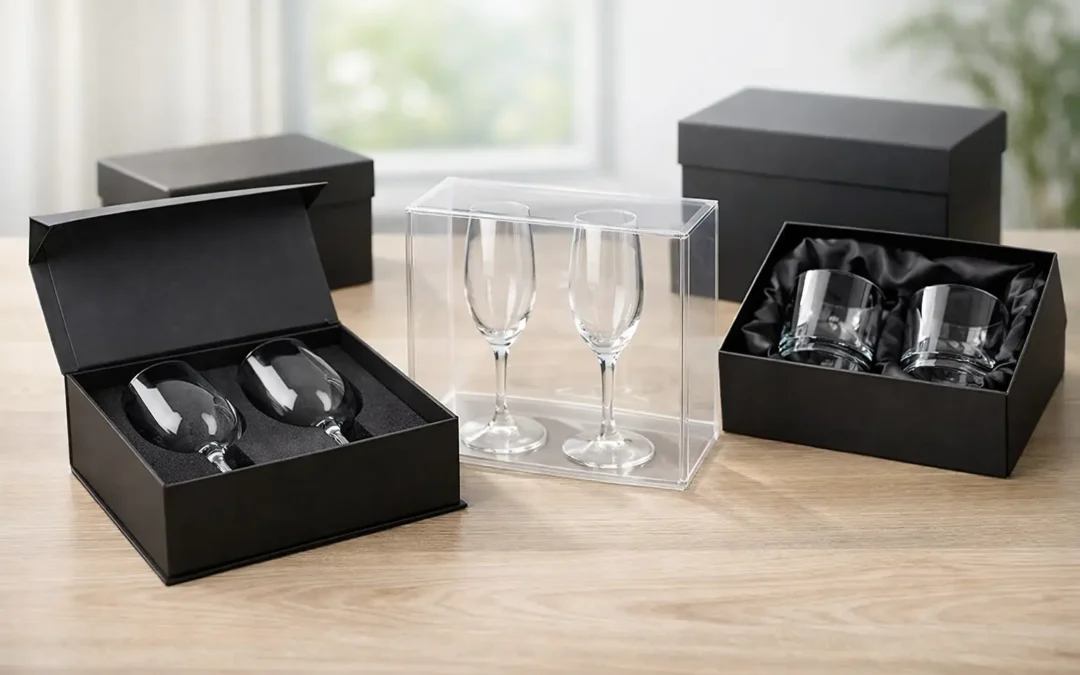
A glassware gift box does two jobs at once. It protects fragile items and it sets the tone before the recipient even sees what is inside. If you are packing wine glasses for a promotion, tumblers for a settlement gift, or champagne flutes for a wedding, the box is not a finishing touch. It is part of the product.
For business buyers, that matters. The right packaging can lift perceived value, reduce handling issues and make your glassware easier to present, transport and sell. The wrong packaging can make a quality gift feel rushed, generic or awkward to manage. That is why choosing the right format upfront saves time later.
What a glassware gift box needs to do
At a practical level, glassware packaging has to fit the shape and size of the item properly. A box for stemless wine glasses is a different proposition from a box for tall champagne flutes or a wider decanter. Height, bowl width, base diameter and overall weight all affect what packaging will work well.
But fit is only part of the decision. A glassware gift box also needs to suit the occasion. Corporate gifting usually calls for a clean, professional look. Wedding favours may need something polished and gift-ready with minimal fuss. Retail display often benefits from packaging that lets the product stay visible on shelf. If the box looks right but is difficult to pack, stack or transport, it may not suit the job.
That is where many buyers get caught. They focus on appearance first, then discover the box does not support the way they actually need to use it.
Black cardboard or clear plastic glassware gift box?
Most buyers are choosing between two practical options – black cardboard boxes or clear transparent PVC or PET boxes. Both have a place, and the better choice depends on how you want the product to be presented.
Black cardboard boxes
Black cardboard boxes are a reliable option when you want a smarter, more premium look without pushing the budget too far. They work especially well for corporate gifts, cellar door presentation, curated sets and event gifting where the packaging needs to feel polished straight away.
They also suit glassware that does not need to be seen before opening. If the appeal is in the full gifting moment, a black box adds a level of anticipation and gives a clean base for ribbons, stickers or branded sleeves if you want to dress it up further.
From an operational point of view, black card stock boxes are straightforward to store, pack and move in volume. For businesses handling regular orders, that simplicity matters.
Clear PVC or PET boxes
Clear boxes work best when visibility is a selling point. If you are packaging decorated wine glasses, branded beer glasses, engraved tumblers or stylish shot glasses, a transparent box lets the product do the talking.
This can be useful in retail and event settings where people are choosing quickly and want to see exactly what they are buying. A clear box can also suit wedding and celebration gifts where the presentation needs to look light, modern and ready to hand over.
The trade-off is that fingerprints, dust and packing quality are more noticeable in a clear box. If you choose this style, the glassware and the packing finish both need to be spot on.
Matching the box to the type of glassware
Not all glassware behaves the same in packaging. A tumbler is generally easier to box than a flute. A decanter or carafe often needs more careful consideration because of its wider body and shifting weight. Shot glasses may look simple, but when packed in sets they still need to be secured properly and presented neatly.
For stemmed wine glasses and champagne flutes, height and stem protection are the biggest considerations. You want enough room for the glass to sit comfortably without unnecessary movement. For tumblers, whiskey glasses and water glasses, the shape is more stable, but the box still needs to support a clean, snug presentation.
Beer glasses can vary more than buyers expect. A standard straight-sided glass is one thing. A larger bowl shape or taller format can change the packaging requirements quickly. The same applies to spirit glassware. Vodka, gin and other shot glasses may be compact, but if they are part of a gift pack, the box still has to feel balanced and intentional.
Then there are carafes and decanters. These are often premium items, so the packaging has to keep up. If the product feels elevated but the box feels thin or ill-fitting, the whole gift loses impact.
When standard boxes make sense
Ready-made packaging is often the smartest choice when the glassware size is common and the project timeline is tight. For many business buyers, standard boxes offer the best mix of speed, presentation and cost control.
This is particularly useful for promotions, hospitality gifting, event packs and repeat orders where you need a dependable result without stretching lead times. If the goal is to get quality packaging in place quickly, a standard glassware gift box can do the job extremely well.
There is also less complexity. You are not spending extra time on packaging development when an existing solution already suits the product. For smaller quantities or straightforward campaigns, that can be a real advantage.
When custom packaging is worth it
Custom packaging starts to make more sense when volume increases or when the product setup is less standard. If you are combining glasses with bottles, creating branded merchandise sets or packaging unusual shapes, a custom solution can improve both presentation and packing efficiency.
The value is not just in appearance. Custom sizing can reduce movement inside the box, improve handling and create a more consistent result across larger runs. For promotional product resellers, event planners and retail brands, that consistency is often worth the extra planning.
It also gives you more control over how the gift is received. If the packaging is part of the brand experience, a generic box may do the basics but miss the bigger opportunity. It depends on the purpose of the campaign, the quantity required and how much the packaging contributes to the final sale.
Presentation matters, but practicality matters too
A good-looking box that is difficult to assemble or slow to pack can become a problem quickly, especially for time-sensitive event work or high-volume fulfilment. That is why practical questions are worth asking early.
Will the box be packed in-house or by a third party? Does it need to travel individually or in larger consignments? Will it sit on a retail shelf, be handed out at an event, or form part of a mail-out? These details shape the right packaging choice just as much as colour or finish.
For example, a clear box may be perfect for display, but if the product is being moved through multiple handling stages, a black cardboard option may be the more forgiving and efficient choice. Neither is automatically better. The right answer depends on how the packaging will actually be used.
Choosing a supplier who understands the category
Glassware packaging is not a one-size-fits-all purchase. A supplier needs to understand the differences between wine glasses, tumblers, flutes, shot glasses and decanters, and how those differences affect the box choice.
That kind of category knowledge helps avoid common issues such as poor fit, overcomplicated packing and packaging that looks fine online but does not work in practice. For business buyers, responsive quoting and clear advice are just as important as the box itself.
That is where a specialist supplier such as WineBox can add real value. Instead of treating packaging as a generic add-on, the focus stays on what suits the glassware, the gifting occasion and the order volume.
A better gift starts before the box is opened
The best glassware gift box is the one that makes the item feel considered, protected and ready to present without creating extra work for you. Whether you need an economical black box for a run of branded tumblers or a clear gift box for elegant flutes, the right packaging should make your product easier to gift and easier to sell.
If you are choosing packaging for glassware, think beyond what looks good in a photo. Think about fit, handling, timing and what the recipient should feel when they pick it up. That is usually where the better packaging decision starts.