
A corporate gifting deadline can come around quickly: the glasses have arrived, the artwork is approved, and the event date is fixed. That is when stock box leadtimes become the detail that determines whether your glassware set is ready to present or still waiting on packaging. For businesses, event planners and gift suppliers, choosing the right box is not only about appearance. It is about getting suitable protection and a professional finish within the time available.
Ready-made glassware boxes are often the practical answer when time matters. Black card stock boxes and clear transparent PVC or PET boxes can provide an attractive presentation without the longer production schedule involved in a fully custom packaging run. The right choice still depends on your glass size, order quantity, delivery location and the finish you need for the occasion.
What Stock Box Leadtimes Mean for Your Order
Stock box leadtimes refer to the time needed to confirm availability, prepare your order and dispatch packaging that is already made in a standard format. Because these boxes do not need new artwork, a custom cutting die or a dedicated production run, they can usually move through the ordering process far more quickly than custom-made packaging.
That does not mean every stock box is instantly available in every quantity. Popular sizes and formats can sell through, particularly around Christmas, end-of-financial-year promotions, wedding season and major corporate event periods. Larger orders may also need additional preparation time, even where the box itself is held in stock.
It helps to treat the lead time as starting once the important details are confirmed: the box style, quantity, dimensions, delivery address and payment or account approval. If you are supplying glassware from another source, allowing time to check the fit before packing a full order can prevent a last-minute problem.
For Australian buyers organising promotional merchandise or gift packs across several locations, freight should be considered separately from product availability. A box may be ready for dispatch, but delivery to Perth, regional Victoria or a remote venue will not follow the same timetable as a metropolitan delivery. Planning the packaging order early gives you more control over the full schedule.
Why Stock Boxes Are Often the Fast Option
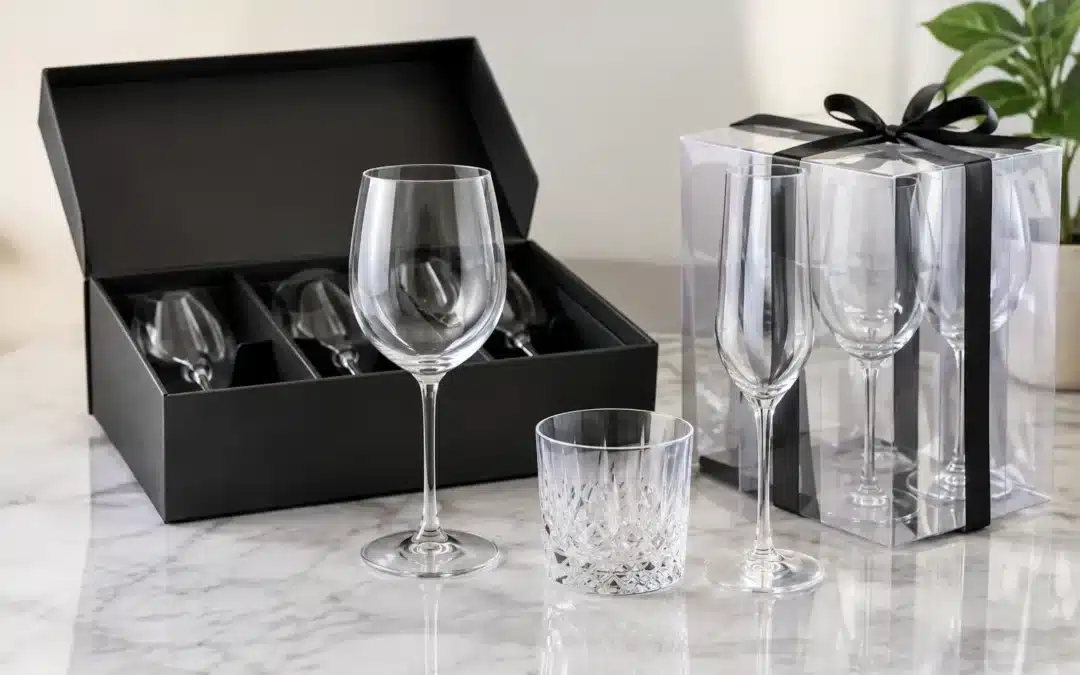
Stock packaging has a clear advantage when your priority is speed without compromising presentation. Economical black card boxes suit many corporate gifts, cellar-door sales, retail glassware packs and wedding favours. Their simple, polished finish helps the glassware remain the focus while giving the finished item a more valuable feel.
Clear PVC or PET gift boxes take a different approach. They let customers see the wine glass, tumbler, champagne flute or decanter before opening the package. This can work particularly well for retail displays, branded glassware promotions and curated gifts where the shape, printing or colour of the glass is part of the appeal.
The trade-off is that stock formats are made to standard dimensions. They are ideal when your glassware fits the available size well, but they cannot be adjusted to suit an unusual bowl shape, an extra-tall stem or a multiple-item gift set in the way a custom box can. Fast turnaround is valuable only if the box properly supports the product inside it.
Check the Fit Before You Commit
Glassware packaging needs to do two jobs at once: present the item well and give it sensible protection during handling. A box that is too tight can place pressure on a glass, while a box that is oversized can make the product look lost inside the package. This matters for single wine glasses and beer glasses, but it is especially relevant for wider tumbler glasses, carafes and decanters.
Measure the widest point, full height and base diameter of the actual glassware, rather than relying only on a supplier description. Small differences in a stem, rim or base can affect whether a box is suitable. If you are packing a glass alongside a bottle, voucher, garnish or other gift component, assess the entire finished set rather than the glass on its own.
Before placing a larger order, clarify whether the product will be supplied assembled or flat-packed, and consider who will pack the glassware. Flat-packed boxes can be practical for storing and transporting larger quantities, while assembled presentation may suit smaller runs or occasions where labour time is limited. The most economical packaging option is not always the cheapest unit price if it creates unnecessary packing work at the end.
When a Custom Box Is Worth the Extra Time
Custom packaging is generally better suited to larger quantities, specific branding requirements or products that do not fit standard box dimensions. It can provide the tailored look needed for a winery release, premium corporate campaign, hospitality merchandise range or retail gift set. A custom solution also gives more scope to match the pack to a particular glass style and intended customer experience.
The additional lead time comes from the work that happens before manufacturing begins. Measurements need to be confirmed, artwork may need approval, materials need to be allocated and the packaging must be produced for the order. These steps are worthwhile when the box is a visible part of your brand, but they are not ideal for a promotion that needs to leave next week.
There is also an order-volume consideration. Custom-made boxes become more commercially sensible when the quantity is high enough to justify the setup and production process. For a small run of employee gifts, wedding favours or a one-off customer thank-you, a stock box can deliver a professional result with less complexity. For an ongoing retail range, the stronger brand impact of custom packaging may justify the planning.
How to Avoid Delays in Glassware Packaging
The fastest orders are usually the clearest ones. Providing complete information at the enquiry stage allows the supplier to confirm suitable options and give a more realistic turnaround estimate. A photograph of the glassware can help, but measurements are still essential for selecting the right format.
When timing is tight, have these details ready:
- the type of glassware, including its full dimensions and quantity;
- your preferred box style, such as black card or clear transparent packaging;
- whether the box is for one item, a pair or a complete gift set;
- the date you need the boxes delivered, not merely dispatched; and
- the delivery suburb or venue, especially for regional or interstate freight.
It is also wise to build a buffer into the project plan. Glassware can arrive later than expected, event numbers can change, and a final count may reveal that extra packaging is needed. Ordering only the exact number of boxes can leave little room for breakages, packing errors or last-minute additions to a guest list.
For repeat buyers, keeping a record of the box size that works with each glass style simplifies future orders. Retailers, promotional product resellers and hospitality groups often use the same glassware across multiple campaigns. Once a compatible stock box has been identified, reordering can be much more straightforward, subject to current stock availability.
Choosing the Right Timing for Your Project
If the glassware is standard-sized, the quantity is modest and the deadline is close, stock boxes are usually the sensible starting point. They offer a clean, gift-ready finish without adding custom production to the critical path. They also allow businesses to respond quickly to short-notice events, staff recognition programs and customer gifting opportunities.
If the packaging must carry your branding, fit an unusual item or support a major campaign, start the custom discussion as early as possible. The extra planning creates more options and reduces the risk of having to compromise on size, material or presentation later.
WineBox can help buyers compare ready-made black card and clear glassware box options with custom packaging for larger orders. The best choice is the one that fits your glassware, budget and delivery date with room to pack the final gift properly. Confirm those three details early, and your packaging can arrive as a useful part of the project rather than the last task holding it up.