
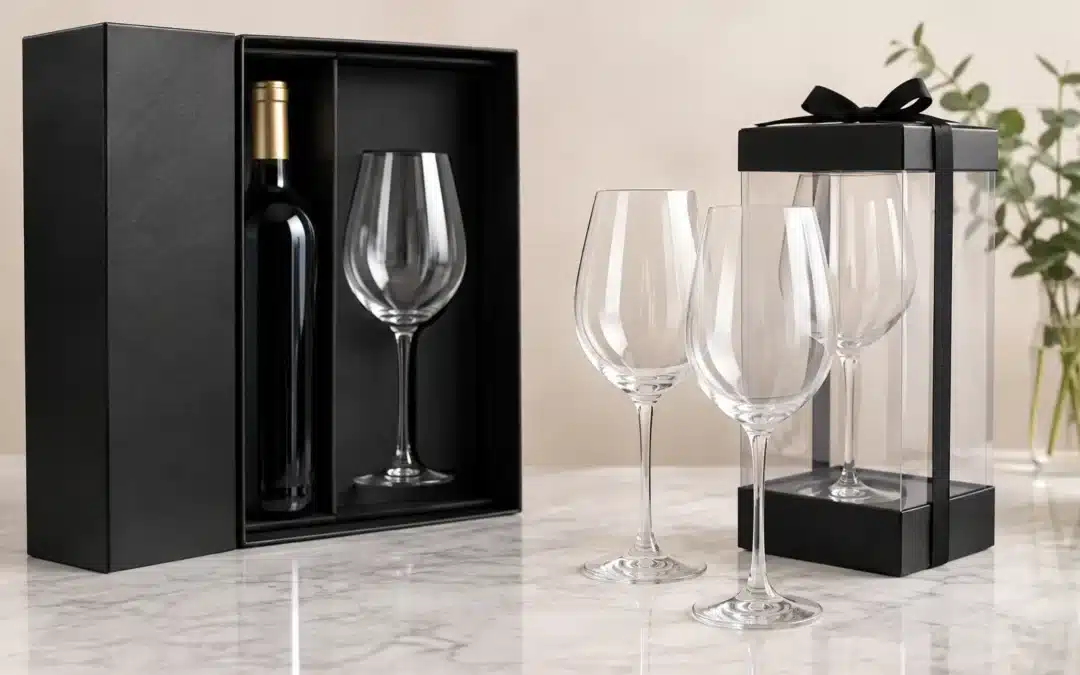
A strong winery packaging example does more than hold a bottle or a pair of glasses. It makes the gift feel considered before it is opened, protects fragile glassware through handling and gives the winery a more professional product to place at the cellar door, in a corporate hamper or on an event table.
For wineries, hospitality venues and gift businesses, the best packaging is usually the option that matches the sale. A simple black cardboard box can give a wine glass set a premium finish at a sensible price. A clear PVC or PET box can put branded stemless glasses or champagne flutes on display while keeping them protected. The right choice depends on what is being packed, how it will be sold and whether branding is needed.
What a Practical Winery Packaging Example Looks Like
Consider a cellar door preparing a seasonal gift set: one bottle of wine, two branded stemless wine glasses and a tasting note card. Rather than handing over loose glasses in tissue paper, the business uses two individual black glassware boxes for the glasses and positions them beside the bottle in a larger hamper. The result is tidy, easy for staff to assemble and far more suitable for customers buying a present.
The glasses are protected from knocks during transport, while the black finish gives the package a clean, premium appearance. A winery does not need to redesign its whole range to achieve this effect. Packaging around the glassware can improve the perceived value of an existing bottle-and-glass offer quickly.
This format also suits corporate orders. A business may purchase branded wine glasses for clients, staff milestones or end-of-year gifting, then add wine separately. Presenting each glass in a purpose-made box helps the recipient receive something that feels like a proper gift rather than promotional merchandise.
Start With the Glassware, Not the Artwork
Packaging needs to fit the product first. A wine glass with a tall stem has very different requirements to a low tumbler, whisky glass or stemless wine glass. If the carton is too large, the item can move around. If it is too tight, packing becomes slow and there is a greater risk of damage when staff are assembling orders.
Before choosing a box, confirm the glass height, widest diameter and the number of pieces per set. This is particularly important for decanters and carafes, which can have unusual shapes and need more internal clearance. If the packaging will also sit inside a hamper with a bottle, allow for the final presentation rather than only the glass dimensions.
A clear box is often a good fit when the glass itself carries the visual appeal. Etched branding, printed logos, coloured rims and distinctive shapes can remain visible on the shelf. Black cardboard packaging is often better when a more restrained, gift-ready look is wanted, or when customers will add their own sticker, ribbon or branded sleeve.
Choose the Format for the Selling Environment
A packaging choice that works well for a wedding may not be the best option for a busy cellar door. Think about the moment the customer sees, carries and opens the product.
Cellar Door and Retail Displays
Clear transparent PVC or PET boxes are useful where customers need to see the glassware immediately. They can help a pair of branded wine glasses, beer glasses or tumblers look like a finished retail set without obscuring the product. This is especially useful for counter displays, gift shops and venue merchandise areas where the packaging has to do some of the selling.
The trade-off is that clear packaging shows every fingerprint, insert and label. It needs neat packing and consistent presentation. For a high-volume retail range, make sure staff have a simple assembly process that keeps each box looking clean.
Corporate Wine Gifts and Promotional Campaigns
For corporate gifts, black cardboard glassware boxes often provide the more polished base. They suit printed gift cards, branded belly bands and presentation within a larger wine hamper. The recipient sees a well-packaged glass first, rather than a loose item that may have been added as an afterthought.
This format works well for wine clubs, real estate settlement gifts, conference packs and staff recognition programs. The packaging also makes fulfilment easier for promotional suppliers, as the glassware can be packed before it is combined with wine, food or other gift items.
Weddings, Events and Favours
Weddings and private events commonly use champagne flutes, wine glasses, shot glasses or small tumblers as favours. Here, packaging must balance appearance with speed. A simple ready-made box can save hours compared with wrapping every item individually, particularly when there are dozens or hundreds of place settings to prepare.
If names, dates or event branding are printed on the glass, clear packaging lets the personalisation show through. If the focus is a more formal table presentation, black boxes can create a consistent look and allow a small tag or label to carry the event details.
Build Protection Into the Presentation
Gift packaging should look good, but glassware packaging also has a practical job. Fragile products can be damaged during delivery, when customers carry purchases to the car or while stock is being moved between storage and a retail floor.
Choose a box size that provides suitable support without making the product hard to insert. For sets, ensure glasses do not touch each other. If glassware is being sent by courier as part of an online order, the presentation box may still need additional outer-carton protection. A gift box is not automatically a freight carton, and treating it as one can lead to breakages and disappointed recipients.
This distinction matters for wineries that sell direct to customers. The internal box should make the product feel special when opened, while the external shipping materials should manage the journey. Planning both layers avoids the common problem of a beautiful gift arriving scuffed or broken.
When Custom Packaging Is Worth Considering
Ready-made packaging is usually the fastest and most cost-effective solution for standard glasses and shorter runs. It is a practical choice for seasonal promotions, wedding orders, venue merchandise and businesses testing a new gift set.
Custom-made packaging becomes more worthwhile when order volumes are larger, the glass shape is unusual or the packaging needs to carry a specific brand message. A winery launching a premium club gift, for example, may want a box designed around a particular decanter and matching glasses. A promotional product reseller may need a tailored size for a client campaign that combines glassware with a bottle.
The decision comes down to volume, repeat use and brand value. Custom packaging gives greater control over dimensions, print and presentation, but it requires more lead time and is generally best suited to planned, larger orders. Standard black or clear boxes give businesses flexibility when quantities change or deadlines are tight.
Keep Assembly Simple for Your Team
The most attractive packaging is not much help if staff find it slow to assemble during a weekend rush. Test the full packing process before committing to a format. Can a team member safely place the glass in the box? Is there room for a card or care instructions? Does the finished package sit securely in a hamper, carry bag or delivery carton?
For recurring gift packs, set a straightforward packing standard. Use the same box orientation, tissue or protective insert, and placement for every order. Consistency matters because it helps the brand look organised, whether the customer is collecting one gift from a cellar door or receiving 200 corporate packs across Australia.
WineBox supplies ready-made black cardboard and clear transparent glassware boxes for wine glasses, beer glasses, tumblers, champagne flutes, shot glasses, decanters and carafes. For businesses with larger requirements, tailored packaging can help bring the product, protection and brand presentation together.
Make the Gift Feel Worth Giving
The strongest winery packaging is rarely the most complicated. It is the package that fits the glassware properly, looks right for the occasion and can be ordered and assembled without creating extra work. A clear box may help a branded glass sell from a display, while a black card box may turn the same glass into a polished corporate or wine-club gift.
Start with the product your customer is most likely to buy as a gift, then choose packaging that makes that purchase easy to present, carry and enjoy. That small decision can turn everyday glassware into a more valuable part of the winery experience.