
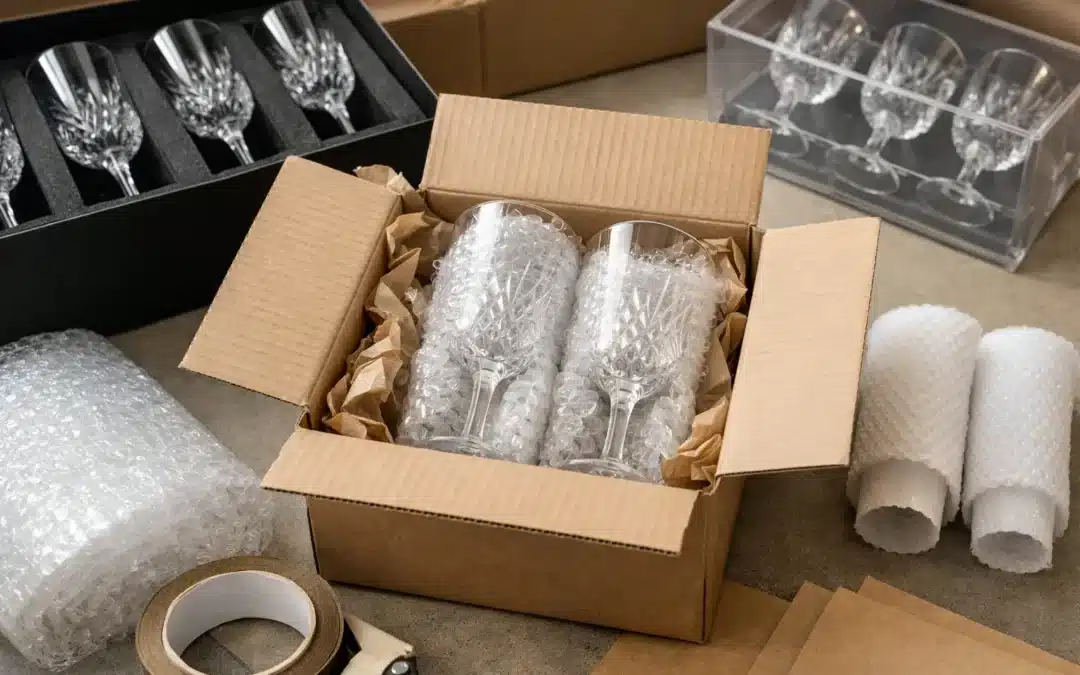
A chipped rim or snapped stem can turn a premium glassware order into an expensive problem fast. If you need to know how to pack crystal glasses for shipping, the real goal is not just getting them from A to B intact. It is making sure they arrive looking professional, gift-ready and worth the money your customer or recipient has paid.
That matters even more when crystal glasses are part of a retail set, a wedding favour, a winery promotion or a corporate gift. Protection is the first priority, but presentation still counts. Good packing should reduce breakage without making the end result look overpacked, clumsy or difficult to unpack.
Why crystal needs a different packing approach
Crystal is not packed the same way as everyday drinkware. It is often thinner, heavier in the bowl or base, and more vulnerable at pressure points such as rims, stems and edges. A standard one-layer wrap and a loose carton might be enough for low-cost glass, but it is usually not enough for crystal.
The main issue is movement. Most shipping damage happens because the glass shifts inside the box, knocks against another item or absorbs impact through one exposed point. That means the best packing method is built around separation, cushioning and a correctly sized outer box.
There is also a practical trade-off here. More padding can improve protection, but if the package becomes bulky, freight costs rise and presentation can suffer. For business orders, especially promotional gifting or event fulfilment, the right balance matters.
How to pack crystal glasses for shipping step by step
Start with a clean, dry glass. Any moisture left on the surface can affect wrapping materials, and fingerprints or marks are not ideal if the item is being sent as a gift or retail product.
Wrap the glass individually with soft packing paper or tissue first. This inner layer helps protect the surface from scratches and keeps bubble wrap from leaving marks. For cut crystal or delicate decorative finishes, that softer first layer is worth the extra effort.
After that, add bubble wrap around the entire glass. Do not wrap the stem on its own and assume the rest will be fine. The bowl, rim, stem and base all need protection. The wrap should be firm enough to stay in place without crushing the shape. Secure it with tape on the wrapping material, not directly on the glass.
If you are packing stemware, pay close attention to the stem and base junction. That is one of the most common break points in transit. A little extra cushioning in that area can make a significant difference.
Once wrapped, place each glass into its own snug internal box or protective cavity if available. This is where many packing jobs fall short. If multiple crystal glasses are packed together in one open space, even heavy wrapping may not stop impact damage. Separation is what prevents one broken item from taking out the rest of the order.
Choosing the right box matters more than most people think
The outer box should be strong enough to handle stacking and transit pressure, but not so large that the contents move around. Oversized boxes are one of the most common causes of breakage because they create empty space that needs to be filled. If that void fill shifts, the glass shifts too.
A proper fit gives you more control. For single-glass gifting, a purpose-made glassware box often gives a better result than a generic carton because it helps with both presentation and stability. For higher-volume shipping, especially mixed orders or multi-piece sets, you may need an inner pack and outer transit carton working together.
Black cardboard gift boxes or clear PVC or PET boxes can be ideal for presentation, but it depends on how the item is travelling. If the box is primarily a display or gifting box, it may still need to sit inside a tougher outer shipping carton for courier handling. That extra layer is often the difference between a shelf-ready presentation box and a damaged delivery.
Internal support is what stops breakage in transit
When people think about how to pack crystal glasses for shipping, they often focus on wrapping and forget internal support. Wrapping protects the surface. Internal support stops movement.
The best setup keeps the glass centred within the box so it does not rattle, tip or absorb direct shock through one side. Inserts, dividers and fitted cavities all help. If the crystal glass is travelling with a bottle, accessory or promotional item, every component should be secured separately. A loose bottle beside a wrapped glass is asking for trouble.
This is especially important for curated gift packs. They need to look polished when opened, but they also need to survive a courier network. That means every product in the set needs its own place. Good packaging should do both jobs at once.
Presentation and protection should work together
For event gifting, cellar door sales, hampers and branded merchandise, packaging is part of the product. A crystal glass in a well-fitted box looks more valuable, feels more considered and is easier to hand over at the point of sale or gifting.
That is why the packing method should match the occasion. A wedding favour or corporate gift may need a cleaner, more refined finish than a bulk freight order to a warehouse. A transparent gift box can help showcase the item, while a black cardboard box can create a more premium feel. In both cases, the visual finish only works if the glass arrives intact.
There is a practical balance here too. Some customers need economical packaging for volume orders. Others need a stronger presentation outcome because the box is part of the brand experience. Neither option is wrong. It depends on whether the priority is freight efficiency, shelf appeal, gifting impact or a combination of all three.
Common packing mistakes to avoid
The biggest mistake is underestimating how fragile crystal can be once it enters a courier system. A glass may survive a careful car trip across town and still fail in standard freight because it is exposed to drops, stacking pressure and repeated movement.
Another common issue is using too much loose fill and not enough structure. Void fill can help, but it should not be the only line of defence. If the glass has room to move, the risk remains.
Packing multiple glasses rim to rim or base to base in the same space is also a poor shortcut. It may save time when you are trying to get orders out quickly, but it raises the chance of impact damage significantly. For commercial orders, that can quickly erase any saving through replacements, complaints and re-shipping.
Finally, do not assume a gift box is automatically a shipping box. Many presentation boxes are designed to improve appearance, not absorb the rough handling of freight on their own. If the shipment is going through a courier network, use an additional transit carton where needed.
When standard packing is enough and when custom packaging is better
Not every shipping job needs a custom packaging solution. If you are sending a simple single-glass order in moderate volumes, a ready-made box with suitable internal protection may be enough. That is often the most practical option for small businesses, event planners and gift sellers who want a clean result without overcomplicating fulfilment.
Custom packaging becomes more useful when the glass shape is unusual, the order volume is larger, the product needs branding, or the package includes multiple items such as a bottle and matching glasses. In those cases, a tailored box can save time during packing, improve consistency across orders and reduce the chance of damage caused by poor fit.
For businesses sending glassware regularly, custom-fit packaging can also make operations smoother. Staff can pack faster, presentation stays consistent and less guesswork is involved. That matters when turnaround times are tight and the packaging needs to perform at scale.
A practical standard for shipping crystal well
If you want a reliable baseline, use this thinking. Wrap each glass properly, isolate it from other items, support it inside a fitted box and then protect that box again if it is travelling through freight. That approach works for single gifts, retail sets and event orders because it addresses both protection and presentation.
For businesses, the smartest packaging choice is usually the one that reduces damage without adding unnecessary labour or cost. A box that looks good but does not protect the product is a false economy. So is a heavy-duty setup that drives up freight charges and slows down packing when a better-fitted option would do the job.
If you are sending crystal glasses as part of a gift, promotion or retail order, the packaging should help the item arrive in one piece and look the part the moment it is opened. That is where the right box stops being an afterthought and starts doing real work.