
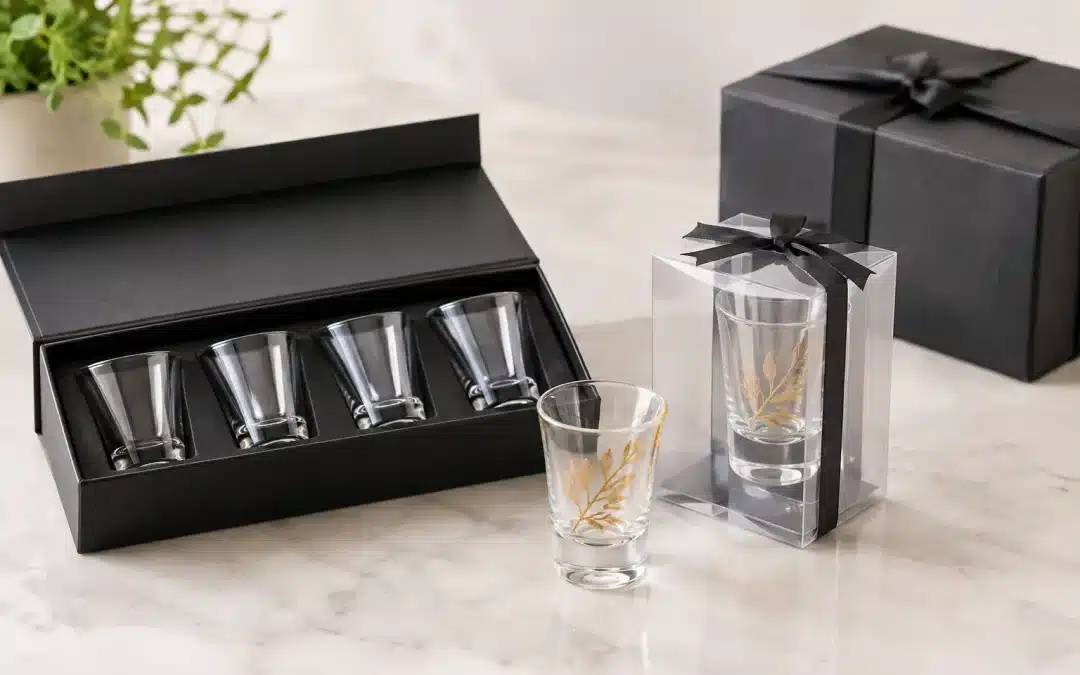
A shot glass may be small, but it can still arrive chipped, dusty or looking underwhelming if the packaging is an afterthought. Knowing how to box shot glasses properly helps turn a simple glass into a presentation-ready gift, wedding favour, retail item or promotional product – while reducing the risk of breakage in handling and transport.
The right box does more than cover the glass. It should hold the item neatly in place, suit the occasion and make the product easy to pack at volume. Whether you are preparing branded vodka glasses for a corporate campaign, wedding favours for guests or gift sets for a bottle shop, the process starts with matching the box to the actual glass.
Start With the Shot Glass Measurements
Shot glasses are not all the same shape. A traditional straight-sided 30 mL glass needs a different internal fit from a taller shooter, a heavy-based whisky shot glass or a stemmed cordial glass. Before choosing packaging, measure the widest point of the glass, its total height and the width of the base.
Allow enough internal clearance for the glass to be inserted without force, but avoid a box that is so large that the item can shift around. A snug, sensible fit improves presentation and offers better protection. If glasses vary slightly between batches, use the largest sample as the reference point.
Also consider what will sit in the box with the glass. A printed card, promotional insert, tissue wrap or miniature bottle can change the internal space required. Planning this early prevents the common problem of ordering boxes that fit the glass alone but not the finished gift set.
Choose the Right Box Style
For most shot glass applications, black cardboard boxes and clear transparent plastic boxes are the practical choices. The best option depends on whether the priority is a premium reveal, visibility at retail or fast, economical packing.
A black card stock box gives the presentation a neat, professional finish. It works particularly well for corporate gifts, liquor promotions, hospitality merchandise and wedding favours where you want the glass to feel like a considered gift. Black packaging also provides a clean background for labels, sleeves, foil stickers or branded inserts.
Clear PVC or PET boxes are useful when the glass itself is the selling point. They allow customers to see printed branding, coloured glass or an unusual shape before opening the package. This is a strong option for retail counters, event merchandise and promotional products where immediate visual impact matters.
PET is often preferred when clarity and a polished finish are priorities. PVC and PET styles should still be selected based on the glass dimensions and how the finished packs will be stored or transported. For larger quantities, custom-made packaging can provide a more tailored fit and a stronger branded result.
How to Box Shot Glasses Without Breakage
A good-looking box is only useful if the glass is protected. The goal is to stop glass touching glass, prevent movement inside the box and keep the rim away from hard edges.
First, make sure every shot glass is clean and completely dry. Moisture trapped inside packaging can leave marks on the glass or affect paper inserts. Handle glasses by the base where possible, particularly if they have been polished, to avoid fingerprints on clear surfaces.
For single glasses, wrap the item lightly in tissue paper or use a suitable insert before placing it in the box. The wrap should protect the rim and sides without adding so much bulk that the box bows or will not close properly. If the box has an internal divider or fitted insert, check that the base sits flat and the top of the glass does not press against the lid.
For pairs, sets of four or larger gift packs, dividers become more important. Each glass should have its own compartment, with enough separation to prevent contact during delivery. Do not rely on a loose layer of tissue between glasses in a shared box. It can shift in transit, especially when cartons are stacked.
Before packing the full order, complete a simple test. Close one finished box, hold it upright and give it a gentle shake. If you can hear the glass moving, the fit needs attention. Add an insert, revise the wrap or select a more suitable box size before packing hundreds of units.
Pack for the Occasion, Not Just the Product
The same shot glass can need very different presentation depending on where it is going. A wedding favour usually benefits from a refined, compact pack that suits a place setting or gift table. A branded event giveaway needs quick assembly and enough protection to be handed out or carried home. A retail pack must look tidy on display and withstand repeated handling.
For corporate promotions, consider how the recipient will understand the gift. A branded card inside the box can explain the campaign, include a message or encourage the recipient to keep the glass. For weddings and private celebrations, a name tag, ribbon or small thank-you card can add personality without requiring an entirely custom box.
If you are combining shot glasses with a spirit bottle, do not treat it as an improvised add-on. The bottle and glasses need separate support within the outer packaging. Their weight and movement are very different, and a bottle can easily damage glassware if the pack has no divider or purpose-built internal structure.
Use a Repeatable Packing Process
When packing a large run for a promotion, venue or event, consistency saves time and protects your finished presentation. Set up a clear packing bench with glasses, inserts, boxes, labels and outer cartons arranged in the order they are used. This reduces handling and makes quality checks easier.
A reliable process usually follows four stages:
- Inspect each shot glass for chips, printing faults, dust and fingerprints.
- Add tissue, an insert or a divider where required.
- Place the glass into the box and check that the lid closes cleanly.
- Label the finished box and pack it upright into an outer carton.
Keep finished boxes away from the edge of the workbench and avoid overfilling outer cartons. Even well-boxed glasses can be damaged if heavy cartons are dropped or if packs are crushed under excessive weight. Fill empty space in shipping cartons so individual boxes cannot slide around.
For event work, allow time for a sample approval before the main pack. A single approved unit confirms the orientation of logos, the position of inserts, label placement and the overall look. It is much easier to adjust a sample than rework an entire order the day before a function.
Consider Branding and Perceived Value
Packaging is often the difference between a promotional item and a gift people want to keep. A plain black box can look premium with a well-positioned sticker or branded sleeve. A clear box can display a printed logo on the glass while keeping the product protected and retail-ready.
There is a trade-off, however. More decoration can increase packing time and costs, especially for short runs. If speed and budget are the priority, focus on one clear branding element rather than several competing details. A simple logo label or message card is usually enough to make the pack feel deliberate.
For larger orders, customised packaging may be worthwhile when the glassware forms part of a recurring product range, winery gift pack or major promotional campaign. A box designed around the glass dimensions can improve protection, reduce filler materials and create a more consistent retail presentation.
Common Shot Glass Boxing Mistakes to Avoid
The most frequent mistake is choosing a box by external appearance rather than internal dimensions. A box may look correct beside the glass but still be too narrow at the rim or too tall for stable packing. Always test the actual product.
Another issue is using packaging with no allowance for transport. A shot glass packed neatly for display may need additional support if it will be sent by courier or loaded into event cartons. Retail shelf packaging and freight packaging are not always the same thing, so plan for both layers where needed.
Finally, avoid packing before the print, labels or accessories are ready. Waiting until the glasses are already boxed often leads to reopening packs, handling the glass again and slowing down the job. Bring all components together before the main assembly begins.
A well-fitted box protects the glass, supports efficient packing and gives the recipient a better first impression. For standard black card stock or clear glassware boxes, or tailored options for larger orders, WineBox can help match the packaging to the way your shot glasses will be presented, packed and delivered.