
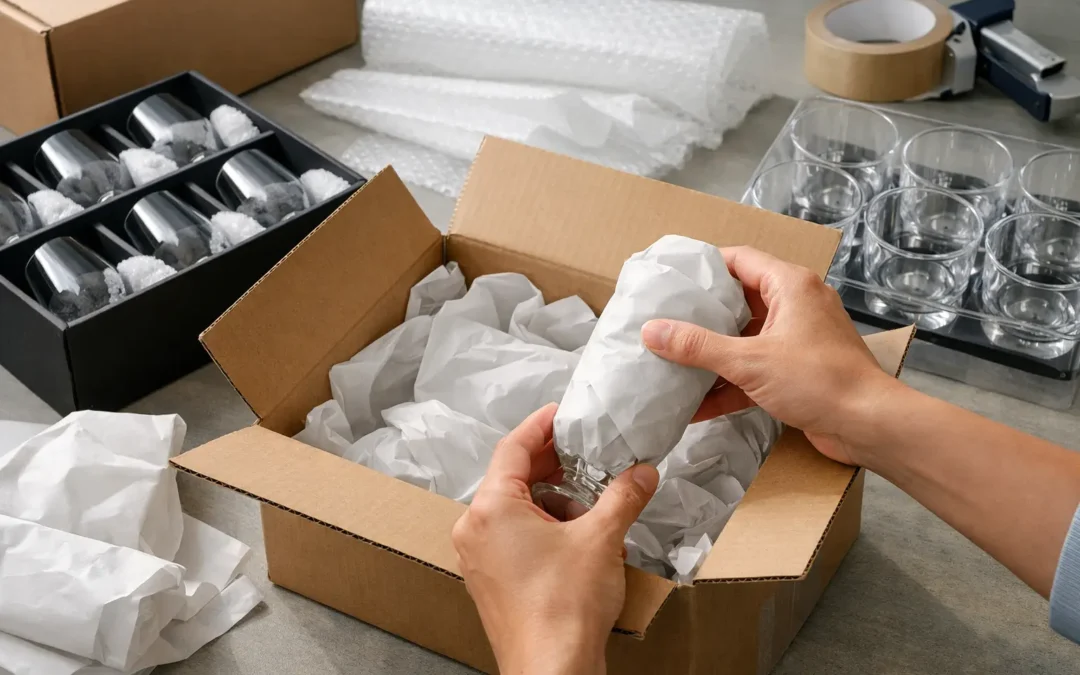
A cracked rim or chipped base can turn a premium gift set into a write-off fast. If you are working out how to pack glasses in a box for retail display, wedding favours, corporate gifting or freight, the job is not just about protection. It is also about presentation, speed and choosing packaging that suits the style of glassware you are sending.
For business buyers, this matters even more. A wine glass set for a cellar door promotion needs a different approach to a single tumbler in a thank-you hamper. The right box helps the product arrive safely, look polished on handover and reduce packing time when you are managing volume.
How to pack glasses in a box without breakage
The safest method starts with matching the box to the glass. That sounds obvious, but it is where many packing issues begin. If the box is too large, the glass can shift in transit. If it is too tight, pressure points around the bowl, rim or stem can create damage before the carton even leaves the warehouse or venue.
Start by checking three things – the height of the glass, the widest point, and whether the shape is stemmed, stemless or oversized. Champagne flutes and wine glasses need different internal clearance to tumblers or beer glasses. Decanters and carafes need even more care because their shape is often broader and less uniform.
Before any glass goes into a box, make sure it is clean and fully dry. Moisture trapped inside packaging can mark the surface or affect the finish of labels, inserts or surrounding gift components. For premium presentation, fingerprints matter too. If the glassware is part of a client gift or event set, a clean finish is part of the overall quality standard.
Wrap the glass only as much as needed for the job. If you are packing for freight or handling by multiple parties, protective wrap makes sense. If you are packing for local collection, hand-delivered gifts or shelf presentation, too much wrap can make the unboxing feel clumsy and cheapen the look. There is a balance between protection and appearance, and the right answer depends on how the box will be used.
Choose the box first, not last
A common mistake is treating the box as an afterthought. In practice, the box often determines how efficient the whole packing process will be. For single-glass gifting, a purpose-sized cardboard or clear plastic box creates a more consistent result than trying to adapt general packaging around a fragile item.
Black cardboard boxes suit formal gifting, corporate packs and retail sets where a clean, premium look matters. Clear PVC or PET boxes work well when you want the glassware visible straight away, especially for weddings, branded merchandise and display-ready products. Neither format is automatically better. It depends on whether the priority is visual impact, concealment, branding space or perceived value.
For example, a printed ribbon or branded sticker can work very well on a black box because the surface frames the decoration neatly. A clear box, on the other hand, puts the glass itself at centre stage. If the shape, print or fill inside the gift pack is the hero, transparency can do more of the selling for you.
Matching packaging to glass type
Stemmed wine glasses and champagne flutes need firm support around the base and enough clearance around the bowl and rim. Tumblers and whisky glasses are usually easier to pack because they have a lower centre of gravity and fewer fragile points, but that does not mean they should rattle around in an oversized box.
Beer glasses can vary widely. A slim pilsner shape behaves very differently in transit to a heavier handled mug. Shot glasses are compact but easy to scratch if grouped loosely. Decanters and carafes often need the most customised thinking because standard square dimensions do not always suit their profile.
If you are packing mixed gift sets, such as a bottle paired with one or two glasses, the fit becomes even more important. The packaging needs to separate each item clearly so they do not knock together. This is where a tailored packaging solution can save time and reduce spoilage, especially across larger runs.
How to pack glasses in a box for gifting and display
Packing for gifting is different from packing for storage. The glass still needs protection, but the opening experience matters as well. A business sending staff gifts, a winery building promotional packs or an event planner preparing guest favours usually wants the packaging to look finished before it is opened.
That means avoiding bulky filler that overwhelms the product. It also means thinking about visibility. If the glass has printed branding, etched decoration or a special shape, hiding it under layers of packing material works against the value of the product.
For display-ready presentation, keep the interior neat and proportional. The glass should sit upright, centred and stable. If the box is transparent, every detail is visible, including crooked tissue, dusty glass or uneven inserts. A polished result comes from consistency, especially when multiple units are being packed for a promotion, wedding or retail shelf.
There is also a labour consideration. If staff are packing dozens or hundreds of units, a box design that is quick to assemble and easy to load can make a real difference. What looks fine for five gifts at home may not be practical for 500 promotional packs on a deadline.
When custom packaging makes more sense
Ready-made boxes are a strong option for standard glassware sizes and straightforward applications. They are efficient, cost-effective and often the best choice when speed matters. But if your glasses are unusually shaped, part of a branded campaign or being paired with other products, custom packaging may be the smarter move.
Custom sizing can reduce movement inside the box, improve shelf presentation and help the set feel purpose-built rather than improvised. It also gives more control over branding, inserts and quantity planning. For event buyers and resellers, that can translate into less packing waste and a more professional finished product.
The trade-off is volume. Custom solutions usually make the most commercial sense when order quantities are higher or when the packaging itself is part of the product value. If you only need a small run, a standard box may be more practical.
Common packing mistakes to avoid
The biggest issue is usually movement. If the glass shifts inside the box, the risk of chipping rises quickly. The second problem is pressure. Overfilling a box with wrap or forcing a tall glass into a box that is slightly too short can stress the glass before it is even moved.
Another mistake is choosing packaging based only on external appearance. A box can look premium and still be the wrong fit for the item. This is particularly common with gift sets assembled from separate components. The bottle fits, the glasses fit, but together the set becomes unstable.
It is also worth watching the outer transport stage. Even a well-packed individual glass can be compromised if grouped badly in a larger carton. If multiple boxed glasses are being shipped together, they should be packed tightly enough to prevent collapse but not so tightly that box edges crush one another.
A practical packing process for better results
If you need a repeatable approach, keep it simple. Measure the glass accurately, select a box that suits both the size and intended use, prepare the glass so it is clean and dry, add only the protection required for the handling conditions, then check the fit before closing the box.
Once closed, gently test for movement. If the glass knocks around, the fit is not right. If the box bulges or feels strained, it is too tight. A good pack should feel secure in the hand and still open neatly for the recipient.
For businesses, consistency is the real goal. The best packaging system is the one your team can repeat quickly without guesswork. That is why specialist glassware boxes tend to outperform generic options over time. They reduce packing variation, support presentation standards and make ordering simpler when you need the same result again.
For many buyers, that is the point. You are not just trying to move fragile glass from one place to another. You are trying to present it well, protect your margin and avoid unnecessary rework. If the box does all three, the packing job becomes much easier.