
A wine glass can look premium on its own, but it needs the right packaging to arrive, display and gift well. Knowing how to choose wine glass boxes comes down to more than picking a box that fits. The best choice balances glass protection, presentation, packing efficiency and the purpose behind the gift.
For a single thank-you gift, a wedding favour or a large corporate campaign, the box should make the recipient feel that care has gone into the item. At the same time, it needs to be practical for your team to pack, transport and hand over.
Start with the glassware, not the box
Measure the actual glassware before selecting packaging. This sounds straightforward, but wine glasses vary widely in bowl width, stem height and base diameter. Two glasses described as standard wine glasses can have very different proportions, particularly when one is a large red wine glass and the other is a slimmer white wine style.
Measure the tallest point, widest point and base of each glass. If you are packing a pair, consider how the glasses will sit inside the box. They should not press against each other or against the box walls. A little clearance is useful, but too much empty space can allow movement in transit.
This principle also applies when packing stemless wine glasses, beer glasses, tumblers, whisky glasses or champagne flutes. Tall flutes need height and stability around the stem. Wide tumblers need a box that supports their diameter. Decanters and carafes often need more considered internal spacing because of their shape and weight.
If your set includes a bottle and glasses, plan for the full arrangement rather than sourcing separate boxes and hoping they work together. A coordinated gift set is more efficient to pack and looks more intentional when opened.
Choose wine glass boxes for the occasion
The right format depends on where the glassware is going and what job the packaging needs to do. A box for a cellar door gift, for example, may need to support retail display and reinforce a polished brand image. Packaging for wedding guest gifts may prioritise a clean, uniform look that is easy to assemble in volume.
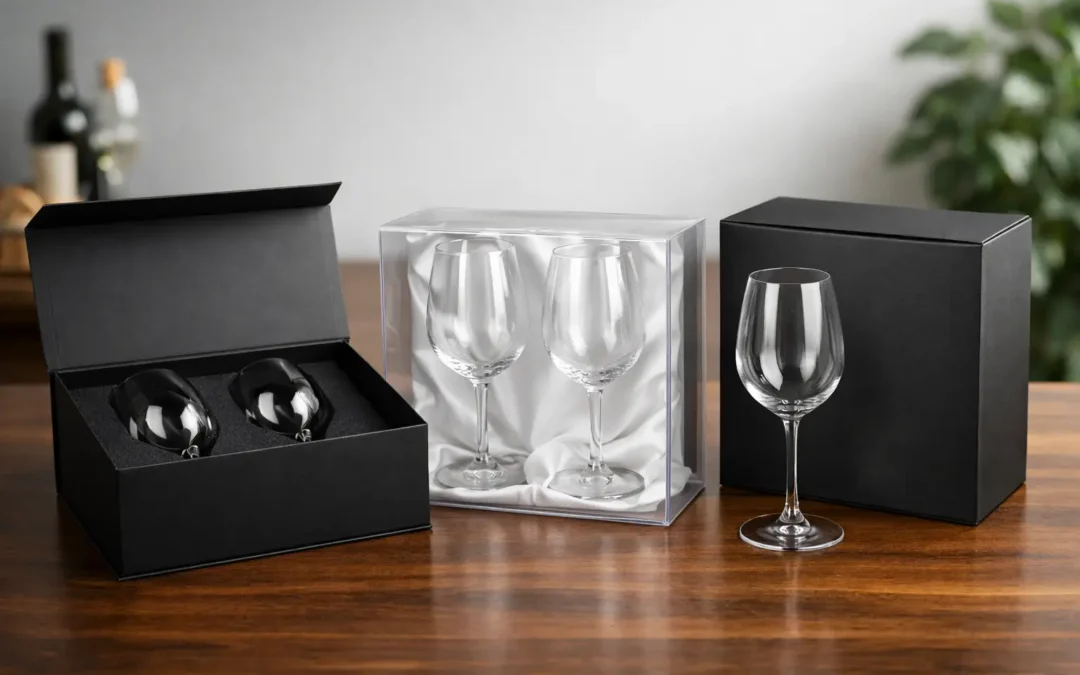
Black cardboard wine glass boxes are a practical choice when you want a professional finish at a competitive price. They suit corporate gifts, promotional merchandise, retail packs and event glassware where the packaging should look smart without taking attention away from the glass itself. Black is also adaptable across many brand colours, ribbon options and printed inserts.
Clear PVC or PET boxes work particularly well when the glassware is part of the visual appeal. They let customers see the product immediately, which can be valuable for retail shelves, hampers, wedding favours and gift sets featuring decorated, printed or branded glasses. Transparent packaging can create a high-impact presentation, although fingerprints and scuffs are more visible, so careful handling during packing matters.
For many buyers, the decision is simple: use black card stock when you want understated presentation and value, or choose clear packaging when visibility will help the product sell or make a stronger impression. There is no single best option. It depends on the glassware, audience and how the gift will be presented.
Match protection to the delivery journey
A wine glass box is gift packaging, not necessarily a complete freight solution. If boxes are being collected at an event or handed directly to clients, presentation may be the main consideration. If they will be sent across Australia by courier, you need to account for the extra handling that occurs after the gift box leaves your premises.
Consider whether you need internal dividers, tissue, protective sleeves or cushioning around the glasses. These additions can prevent glasses from knocking together and improve the unboxing experience. They are especially worthwhile for stemmed glasses, delicate crystal-style pieces, decanters and high-value branded items.
Outer cartons are equally important for larger orders. Pack gift boxes snugly into a suitable shipping carton, avoid overfilling, and use void fill where needed to stop movement. A well-presented glassware box can still fail if the outer carton is too large, too weak or poorly packed.
For event orders, think about the final metre as well. Will staff be carrying cartons into a venue? Will boxes be placed on tables, packed into delegate bags or transported in the boot of several cars? Packaging that is easy to stack and carry can save valuable time on event day.
Consider how many glasses each box should hold
Single-glass boxes are ideal for individual gifts, branded promotional items, wedding favours and staff recognition. They are also useful when recipients will choose their own glass style or when you are pairing one glass with a smaller item.
Two-glass packs are a natural fit for anniversaries, settlement gifts, winery promotions and retail gift sets. A pair feels generous without becoming difficult to carry, and it leaves room for an insert, message card or complementary item where appropriate.
Larger sets can deliver strong perceived value, but they create more packaging and freight considerations. Before committing to a four- or six-glass configuration, check the finished box size, weight and the amount of storage space required. A larger set can be excellent for premium campaigns, but may not suit a giveaway where hundreds of units need to be packed and distributed quickly.
Think about branding early
Packaging is often the first physical touchpoint a recipient has with your brand. Even when using ready-made boxes, you can create a more tailored result through branded stickers, printed cards, ribbon, swing tags or a carefully designed insert. This approach is often suitable for smaller quantities or short-turnaround campaigns.
Custom-made glassware packaging is worth considering when you have a larger order volume, a specific box size, a detailed brand treatment or a recurring product range. It can help create a consistent retail presentation and reduce the need for extra packing materials. The trade-off is that custom work generally needs more planning than selecting a ready-made option.
Have your artwork, logo files, quantities and required delivery date ready before requesting a quote. Clear information allows a supplier to recommend the most suitable solution sooner and helps avoid costly changes late in the process.
Allow for packing time and storage
A box can look excellent in a sample but be slow to assemble across a large campaign. If your team is packing 50 sets, a more involved process may be manageable. If you are preparing 500 corporate gifts or wedding favours, ease of assembly becomes a major purchasing factor.
Ask how the boxes are supplied and whether they need folding, inserts or manual finishing. Also consider where cartons will be stored before the event or promotion. Flat-packed boxes can reduce storage pressure, while assembled boxes may be convenient when space and time permit.
It is wise to order a small allowance above your exact quantity. Breakages, last-minute additions and packing errors happen, particularly with glassware. A modest buffer can prevent a stressful shortfall when your deadline is close.
Make the final choice with a sample pack in mind
Before placing a larger order, assemble one complete gift exactly as the recipient will receive it. Put the glasses in the box, add any tissue or inserts, close it, carry it and place it in the outer carton. This simple check reveals issues that measurements alone can miss, such as a lid that catches on a glass rim or a set that feels awkward to handle.
For tailored advice on ready-made black cardboard or clear glassware boxes, WineBox can help match your packaging to the glass style, quantity and gifting application. A clear brief at the outset makes it easier to achieve the right balance of presentation, protection and price.
The most effective wine glass packaging does not need to be complicated. It simply needs to suit the glass, travel safely and make the finished gift feel ready to give the moment it is packed.