
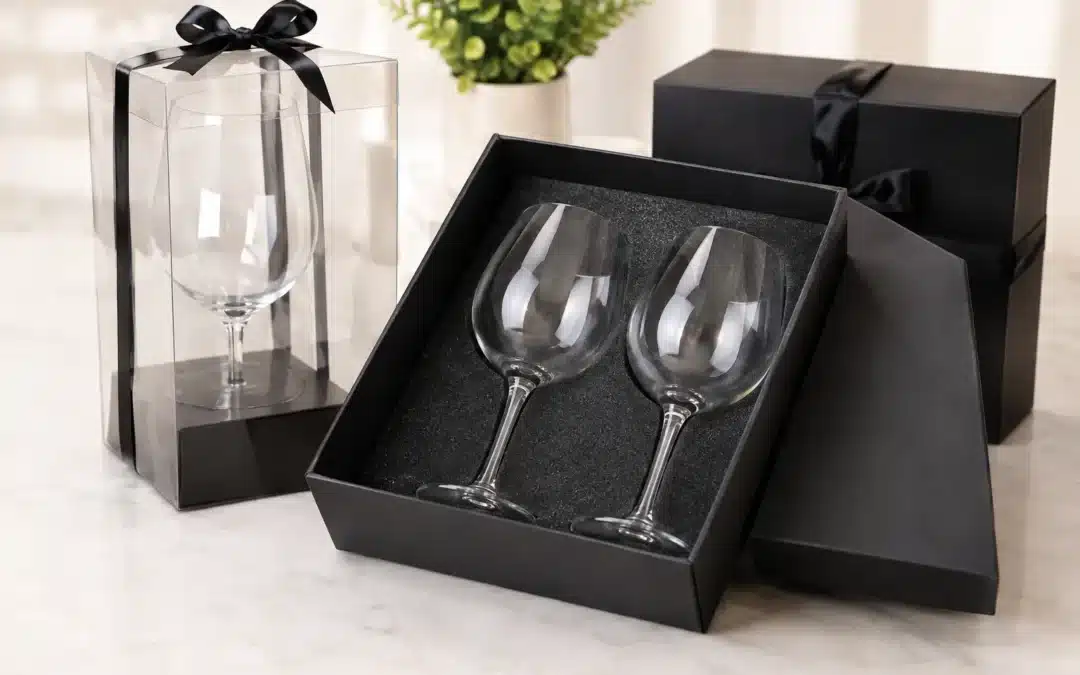
A wine glass can look premium on a shelf, then lose its appeal the moment it rattles inside an oversized box. Choosing the right gift box dimensions is not simply a packing detail. It affects glass protection, freight efficiency, retail presentation and how confidently your customer gives the finished product.
For wineries, promotional product suppliers, event planners and gift businesses, the best box is one that holds each piece securely without making packing slow or costly. The right fit also leaves room for the details that turn glassware into a complete gift – tissue, bottle inserts, printed cards or branded presentation elements.
Start with the Glassware, Not the Box
Measure the actual glassware before selecting packaging. Product descriptions can be useful, but a millimetre or two matters when a tall wine glass has a wide bowl, a thick base or a delicate stem. Where possible, measure a physical sample rather than relying only on supplier specifications.
For a single item, measure the maximum height, the widest point and the base. For stemmed glassware, the bowl is often wider than the base, while champagne flutes need clearance at the rim and stem. Tumblers and whisky glasses may look straightforward, but their heavier base can require a closer, more supportive fit.
When packing more than one piece, arrange the glasses as they will sit in the box before calculating the internal dimensions. Two wine glasses placed side by side require more than double the width of one glass because a divider or cushioning gap is needed between them. Glasses should not touch each other, even when the outer box is sturdy.
Internal Gift Box Dimensions Are What Count
The external size of a box is useful for freight and shelf planning, but internal space determines whether the glassware fits properly. Card stock thickness, folded edges and plastic box construction all reduce usable room inside the pack.
Allow a small clearance around the glassware for packing material and easy insertion. Too little clearance makes the box difficult to pack and can put pressure on rims, stems or corners. Too much clearance creates movement, which is just as risky during handling and delivery.
As a practical guide, aim for enough room to add a protective layer around the glass while keeping it stable. This might be tissue paper for a presentation-focused gift, a cardboard insert for a retail set, or a purpose-made divider for two or more glasses. The correct allowance depends on the fragility of the item, the shipping method and whether the box will be handled individually or packed in larger cartons.
Height needs careful attention
A common mistake is selecting a box based on bowl width and forgetting the total height of a stemmed glass. The box must close cleanly without the lid pressing down on the rim. Leave room above the tallest point for protective material, particularly if the pack will travel through a courier network or be stacked for an event.
This is especially relevant for wine glasses, beer glasses with a tall profile, champagne flutes, decanters and carafes. A box that is only just high enough may work on a display table, but it may not provide the protection needed for transport.
Width and depth must suit the packing layout
For a single tumbler, a close-fitting square or rectangular box often gives a neat result. For two glasses, the arrangement may be side by side, front to back or separated with an internal divider. The best layout depends on the glass shape and whether you are adding a bottle, accessories or printed material.
A wine-and-glass gift set needs more planning than a standard two-glass pack. A bottle is long, heavy and round, so it needs to sit securely without rolling into the glassware. In these sets, purpose-designed internal sections are often worth the investment because they improve both protection and presentation.
Choose the Box Style to Match the Occasion
Dimensions and material work together. A clear PVC or PET box showcases the glassware before it is opened, making it a strong choice for retail counters, wedding favours and promotional displays. The contents need to be packed neatly because every detail is visible, including inserts and tissue.
Black cardboard gift boxes offer a polished, versatile look for corporate gifts, hospitality merchandise and premium retail sets. They can help create a more refined unboxing experience while concealing protective packing materials inside. Black boxes are also practical when the glasses include printing or branding that should be revealed only when the recipient opens the gift.
The ideal style depends on the job. A clear box can increase display appeal for a single branded beer glass, while a black card stock box may better suit a pair of engraved wine glasses presented to clients. Neither option is automatically better – the right choice is the one that supports the product, occasion and order volume.
Factor in Inserts, Bottles and Extra Gift Items
Gift box dimensions should include every item that will be packed, not just the glassware. A corporate gift may contain a tumbler, a mini bottle, a coaster and a thank-you card. A wedding favour may need ribbon, a tag and tissue. These additions can quickly turn a box that seemed suitable into one that is crowded or difficult to close.
Plan the finished pack from the beginning. Place all intended items together and test the opening and closing process. If staff need to force the lid into place or rearrange contents each time, the box is too small or the layout needs refinement. If items slide around when the box is gently tipped, consider a smaller format or an insert that holds each product in position.
For bottle-and-glass gift sets, weight distribution matters as much as space. The bottle should be supported so it cannot shift towards the glassware. Larger boxes also need to be considered alongside the outer shipping carton, as a beautifully presented set still needs safe transport to a customer, venue or retail store.
Avoid Oversizing for the Sake of Flexibility
Buying one large box size for every glassware product may appear simpler, particularly for a business holding mixed stock. In practice, oversized packaging can increase material use, freight costs and breakage risk. It can also make a premium product feel less considered.
A small range of well-chosen box sizes is usually more efficient. For example, a business may use one size for single tumblers, one for paired stemless wine glasses and another for taller stemmed wine glasses or champagne flutes. This keeps ordering manageable while giving each item a professional fit.
Standard ready-made boxes are often the most cost-effective option for common glassware sizes and shorter lead times. Custom packaging becomes more valuable when you have a larger order volume, an unusual glass shape, a branded campaign or a set that combines several products. A tailored box can reduce packing time and create a stronger retail result, but it should be sized around confirmed product samples rather than estimates.
Test Before You Commit to Volume
Before ordering for a promotion, wedding, retail launch or corporate campaign, assemble a sample pack. Check that the glassware goes in easily, the lid closes without pressure and the finished box looks balanced from every angle. If the set will be freighted, place the gift box into its shipping carton with suitable void fill and assess how it performs.
This quick check can prevent expensive rework later. It also gives your team confidence when packing hundreds of sets under a deadline. For custom projects, provide accurate measurements, product samples where possible, expected quantities and details of any bottles or inserts that will share the box.
WineBox can help match black cardboard or clear transparent glassware boxes to the practical requirements of your product and presentation. A carefully sized box does more than contain a glass – it gives the recipient a gift that feels considered before they have even opened it.