
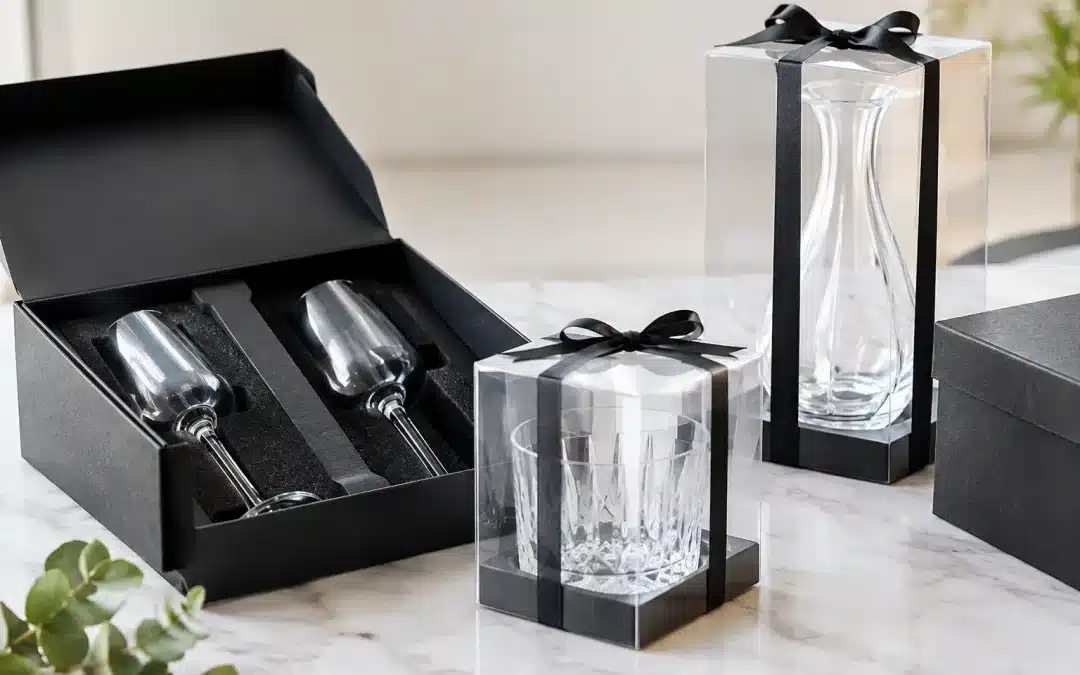
A wine glass can look premium on a shelf, then lose that impact the moment it is handed over in a thin, ill-fitting box. A proper custom packaging review starts with the glassware itself: its height, bowl shape, stem, weight and intended use. For retailers, wineries, corporate buyers and event planners, the right box needs to protect the product, present it professionally and make packing straightforward at volume.
Custom packaging is not automatically the best answer for every order. Ready-made black card stock boxes and clear transparent boxes can provide a polished, practical result quickly, particularly for standard glass sizes and shorter lead times. Custom-made options come into their own when the presentation, dimensions, branding or order quantity call for something more tailored.
Custom Packaging Review: Start With the Occasion
The first question is not, “What box looks best?” It is, “What is this glassware being used for?” A single branded wine glass for a staff thank-you gift has different packaging needs from a pair of champagne flutes sold with a bottle for Christmas, or a set of tumbler glasses prepared for a wedding.
For retail display, visibility can drive the decision. Clear PVC or PET packaging lets customers see the glassware before purchase, which works especially well where the glass has printed artwork, an etched logo or a distinctive shape. It also helps gift-set buyers understand exactly what they are receiving without opening the pack.
For corporate promotions and formal gifting, black cardboard packaging often creates a more understated, premium finish. It suits branded wine glasses, beer glasses, whisky tumblers and decanters where the recipient experience matters as much as the glass itself. Black boxes can also make an excellent base for labels, sleeves or other brand elements added as part of a broader promotional campaign.
Wedding and event buyers should also consider the practical side of distribution. If favours or guest gifts need to be placed at tables, transported to a venue or sent to multiple locations, a box that is easy to pack, carry and store can save considerable time on the day.
Fit and Protection Come Before Decoration
Glassware packaging must look good, but it must first fit properly. A box that is too tall can allow a glass to move around during handling. One that is too tight may make packing slow, put pressure on delicate stems or create a poor unboxing experience.
Measure the widest point, overall height and base diameter of the glass. Do not rely only on a product description, especially if you are using a glass sourced from another supplier. Stemmed wine glasses and champagne flutes need careful attention because their bowls and stems can vary considerably, even when their stated capacity is similar.
For more substantial items such as carafes, decanters and large beer glasses, weight matters too. The packaging needs to suit the item’s profile and the way it will be handled. A presentation box intended for a customer to carry from a shop counter has different demands from packaging prepared for freight or bulk distribution.
This is also where a custom format may be worth the additional planning. If your glassware is unusually shaped, supplied as a pair, or combined with a wine bottle, a standard single-glass box may not offer the secure fit or presentation you need. A tailored solution can allow for the full set rather than asking your team to make mismatched components work together.
That said, custom does not always mean better value. If your glass is a common shape and the order is time-sensitive, a ready-made box may deliver the professional result you need without the extra setup and production time.
Consider the Full Journey, Not Just the First Impression
Think through where the box will go after it leaves your hands. Will it sit on a retail shelf, be included in a gift hamper, travel to an event venue or be delivered directly to clients? Each stage affects the best packaging choice.
A clear box has strong shelf appeal but may show scuffs more readily during busy handling. Black cardboard offers a classic gift-box look and can be a practical choice for storage and presentation, although it does not display the product in the same way. Neither option is universally right. The best choice depends on whether visibility, a refined finish, speed or a tailored fit is the priority.
Branding Should Add Value, Not Complexity
Branded packaging can lift the perceived value of a glassware gift. It can make a promotional item feel more considered, give a winery’s merchandise a cohesive look, or help a corporate gift align with the wider campaign. But branding should suit the size and purpose of the order.
For a large run of branded glassware, custom packaging can help create a consistent presentation from the outer box to the item inside. This is particularly useful for corporate gifting, hospitality merchandise and retail programs where repeatability matters. If the packaging will be photographed, displayed or handed directly to important clients, the investment can be easy to justify.
For smaller orders, a clean black box or transparent gift box may already provide the polish required. Overcomplicating the design can add cost and delay without improving the customer’s experience. A simple presentation that protects the glass and suits the occasion is often the smarter commercial choice.
When reviewing branded packaging, check that the visual treatment will remain clear at the size available. Fine details, lengthy messages and overly busy artwork can lose impact on a compact glassware box. A recognisable logo, event name or short message is usually more effective.
Quantity and Timing Shape the Right Solution
Custom-made packaging is generally best suited to larger quantities, where setup and production can be spread across the order. It is a strong option for organisations planning a product launch, annual corporate gifting, venue merchandise or a large wedding. It gives you more control over dimensions and presentation, but it requires decisions to be made earlier.
If you have a fixed event date, work backwards from when the packaged glassware must be ready, not from the day the glasses arrive. Allow time for confirming box sizing, preparing artwork where relevant, receiving stock and assembling the final gift set. This is especially important when the box will contain more than one item.
For urgent projects, standard packaging can be the practical answer. It removes much of the design and production process while still giving wine glasses, tumblers, shot glasses or beer glasses a gift-ready finish. Fast does not need to look makeshift when the box format is suited to the product.
Buyers should also avoid ordering exact quantities with no allowance. Breakages, last-minute guest additions and sample requirements can all affect the final number needed. A sensible buffer makes the packing process less stressful and helps avoid an uneven presentation at the finish line.
Questions to Ask Before Approving a Box
Before placing an order, confirm the internal fit for your exact glassware, the quantity required, the intended use and your deadline. If the box is part of a set, make sure every component has been considered, including bottles, inserts, printed material or accessories.
It is also worth asking who will assemble the packaging. A box that looks excellent once finished may take longer to prepare than expected if staff need to fold, insert or position several items. For promotional resellers, event teams and busy retail operations, straightforward assembly can be just as valuable as a premium appearance.
At WineBox, the focus is on practical glassware packaging that suits both everyday gifting and larger custom projects. Whether you need economical black cardboard boxes, transparent presentation boxes or a tailored format for a substantial order, the strongest result comes from matching the box to the glass, the occasion and the way it will be distributed.
A good box does more than contain glassware. It gives the recipient confidence that the item inside has been chosen, packed and presented with care – which is exactly what a gift, promotional product or retail purchase should feel like.