
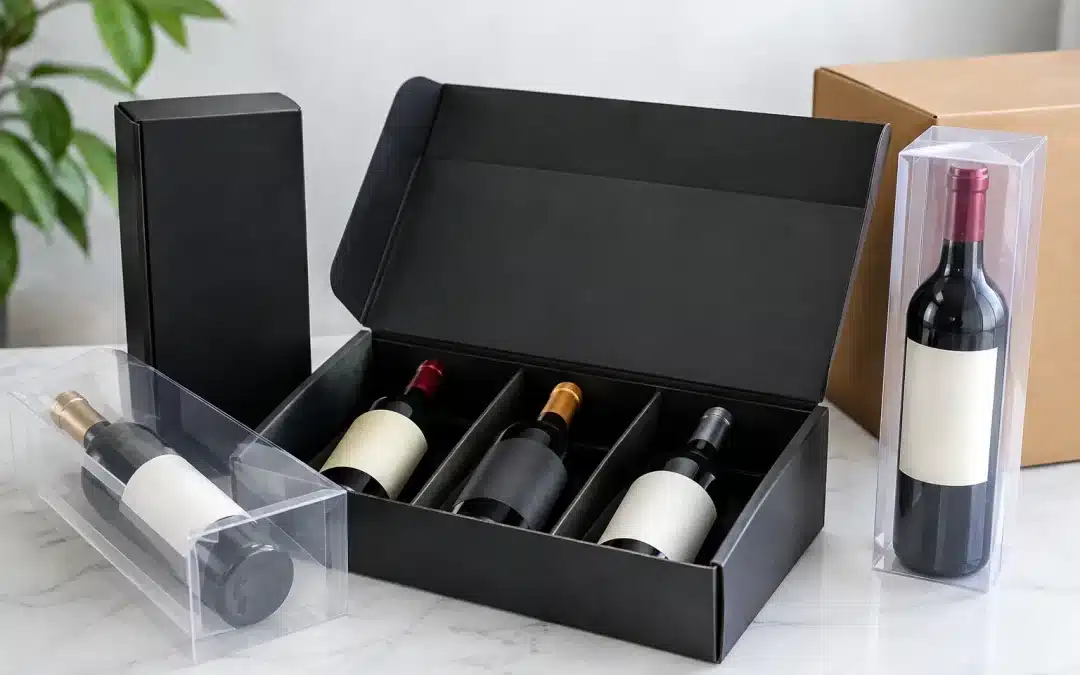
A bottle paired with quality glassware can turn a standard thank-you gift, winery promotion or wedding favour into something people genuinely want to keep. But can boxes hold bottles as well as glasses? Yes, provided the box has been selected for the bottle’s size, weight and movement during handling. A box that looks impressive but allows a bottle to shift is not a gift solution – it is a breakage risk.
For business buyers, the question is less about whether cardboard or clear packaging can physically contain a bottle and more about whether the complete pack will arrive looking professional. The right format needs to support the contents, protect glassware and make the presentation feel intentional.
Can boxes hold bottles safely?
Boxes can safely hold bottles when their dimensions, material and internal support match the product being packed. This matters most for bottle-and-glass combinations, where the bottle is heavier than the glassware and can damage it if the contents are not separated.
A standard glassware box may suit a wine glass, tumbler, beer glass or champagne flute perfectly, but it should not automatically be treated as a bottle box. Bottle heights and diameters vary considerably. A slim sparkling wine bottle, broad-shouldered red wine bottle, gin bottle and beer bottle can all require different internal measurements.
The first check is simple: measure the bottle at its widest point and tallest point, including the cap, cork or foil. Then allow enough clearance for protective packing and easy placement. The bottle should fit without force, but it should not have enough room to roll or knock against the sides.
Weight is the next consideration. A full 750 mL wine bottle is substantially heavier than one or two glasses. Where a gift pack includes both, the base and side panels need to remain firm when the box is lifted, carried or stacked for delivery. This is why packaging should be chosen around the complete set, not the most visually prominent item.
What makes a bottle-and-glass box work?
A polished gift pack relies on practical details that are easy to overlook during planning. The outer box provides presentation, while the internal layout does the work of keeping every item in place.
Choose the right material for the occasion
Black card stock boxes are a popular option for premium gifting, corporate merchandise and retail presentation. Their clean, understated finish works across wine glasses, beer glasses, tumblers, whisky glasses and spirit glass sets. With an appropriately designed internal configuration, they can also form part of a bottle-and-glass gift pack.
Clear PVC or PET boxes offer a different advantage: customers can see the contents before opening the pack. This makes them particularly effective for retail displays, promotional hampers and event packs where the shape, branding or colour of the glassware is part of the appeal. Clear packaging should still be sized carefully, as visibility makes poor fit and loose contents immediately obvious.
Neither material is automatically better. Black card stock generally creates a more gift-ready, premium feel, while transparent packaging is well suited to products that need shelf appeal. The correct choice depends on the occasion, the product weight and how the finished pack will be displayed or transported.
Separate the bottle from the glassware
This is the non-negotiable part of any mixed gift set. A bottle should never be free to move against a wine glass, decanter, carafe or stemware. Even short transport distances can create enough movement for chipped rims, scratched surfaces or broken stems.
A divider, fitted insert or separate compartment gives each item a defined position. It also improves the unboxing experience. Rather than appearing loosely packed, the bottle and glasses look like a considered set made for the recipient.
For wine gift packs, a common arrangement is one bottle alongside one or two stemmed or stemless wine glasses. For corporate campaigns, a branded tumbler or beer glass can be paired with a bottle or selected beverage. Wedding and event organisers may prefer smaller configurations, such as a bottle with a pair of shot glasses or a single presentation glass. In every case, the internal layout should prevent contact between hard surfaces.
Allow for protection, not just fit
A snug fit is useful, but packaging cannot rely on pressure alone. Bottles and glassware benefit from protective materials that cushion small impacts and minimise rubbing. The amount required depends on how far the pack will travel and whether it will be sent by courier, carried by guests or placed straight onto a retail shelf.
For local handover at an event or cellar door, a presentation box with secure internal separation may be sufficient. For distribution to multiple offices, clients or customers, extra protective packing around the finished gift box may be needed. The presentation box protects the product inside it; outer transit packaging protects the presentation box during freight.
Match the box to the way it will be used
The same bottle-and-glass set can need very different packaging depending on its final destination. Planning for the use case early helps avoid ordering a box that is attractive but impractical.
A winery or gift business may want packaging that makes a bottle and branded glasses look premium at point of sale. Here, clear visibility or a refined black finish can lift perceived value and help the pack stand apart from a loose bottle-and-glass bundle.
Corporate marketing teams often need presentation and repeatability. If dozens or hundreds of client gifts are being assembled, a box should be straightforward for staff to pack consistently. A complicated format may look good in a sample but add unnecessary labour and delays during a campaign rollout.
For weddings, anniversaries and milestone events, the focus is often on a polished keepsake. The pack may include personalised glassware, a bottle for the table or a small celebratory drink. Packaging needs to protect fragile items while being easy for guests to carry home.
Retailers and promotional product resellers also need to think about storage and stacking. A tall bottle box may look striking but be harder to store, transport or display. A lower, more compact design can be the better commercial choice if it reduces handling issues without compromising the gift presentation.
Common mistakes when packing bottles in boxes
The most common mistake is selecting a box by external appearance rather than internal dimensions. Two boxes can look similar online or in a showroom yet have very different usable space once inserts, folds and closures are considered.
Another issue is overlooking bottle variation. If a promotion will use wine supplied by different producers, do not assume every 750 mL bottle has the same profile. Confirm the largest bottle likely to be included, particularly where sparkling wine, craft beer, gin or premium spirits are involved.
It is also risky to package a bottle with glassware but no internal separation. Tissue paper may improve appearance, but it is not a substitute for a properly planned divider or insert. The heavier object will always dictate the risk profile of the pack.
Finally, avoid treating a display box as a complete freight solution. Clear boxes and black card stock gift boxes are designed to present products beautifully, but courier transport can involve drops, compression and vibration. Use suitable outer cartons and protective void fill when sending finished packs over distance.
When custom packaging is the better choice
Ready-made boxes are a practical and economical answer for many glassware gifts, particularly when the contents match available sizes. They can speed up ordering and keep packaging costs manageable for smaller runs, event deadlines and standard product bundles.
Custom packaging becomes worthwhile when the bottle and glassware combination is unusual, the quantity is larger, or branding needs to be part of the finished result. A custom-sized box can be designed around the actual bottle, glasses and insert requirements rather than asking the products to fit a close alternative. This can reduce packing time, improve protection and create a more professional presentation.
It is especially useful for organisations creating branded merchandise packs, winery releases, premium settlement gifts, staff recognition sets or recurring retail bundles. When the same combination will be packed repeatedly, a tailored solution can make assembly more efficient and give every recipient a consistent experience.
Before ordering, have the bottle dimensions, glassware measurements, quantity, intended use and delivery timeframe ready. These details make it much easier to identify whether an economical ready-made option will do the job or whether a custom format is the sensible investment.
A well-chosen box does more than hold a bottle. It keeps glassware protected, makes the set easier to handle and gives the recipient a gift that looks considered before they have even lifted the lid.