
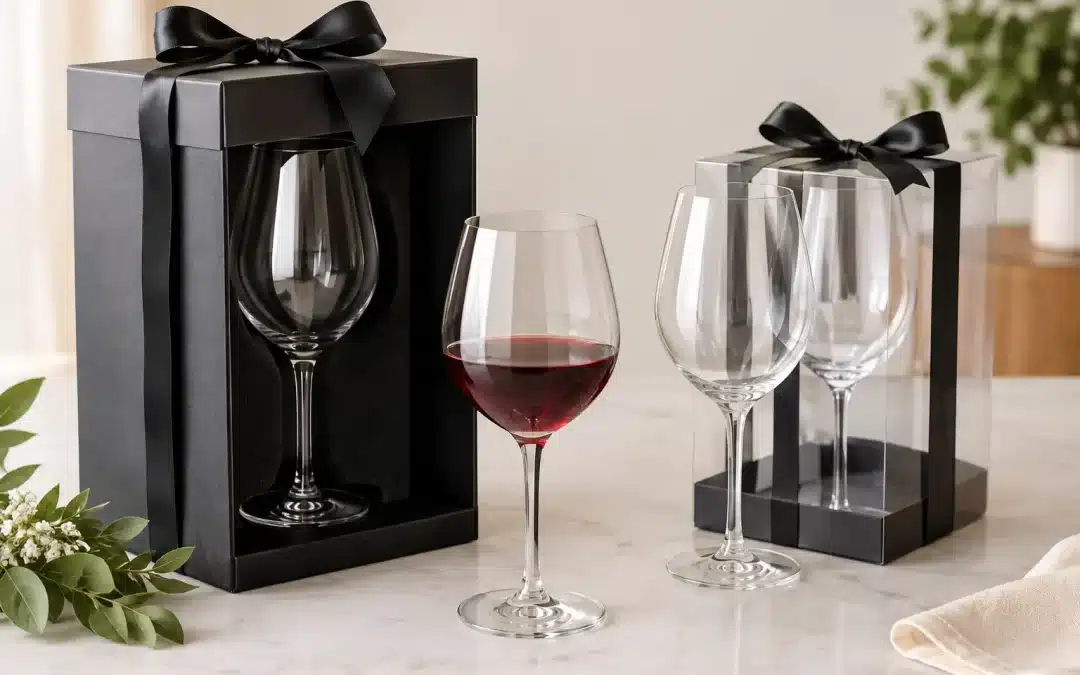
A wine glass can look premium on its own, but the way it is presented often decides whether it feels like a considered gift, a retail-ready product or simply an item waiting to be wrapped. This wine glass packaging guide is designed for businesses, event buyers and gift makers who need glassware boxes that look polished, protect the product and make ordering straightforward.
The right box does more than cover a glass. It gives your customer a better unboxing experience, keeps a set looking organised and creates a practical surface for branding, labels or event details. For corporate gifts, winery merchandise, wedding favours and promotional packs, that presentation can add genuine perceived value without changing the glassware itself.
Start with the glass, not the box
The most common packaging issue is choosing a box based on a product photo or a broad description such as “wine glass”. Wine glasses vary significantly in bowl width, stem height, base diameter and overall shape. A tall, narrow flute needs a very different fit from a stemless red wine glass or a wide-bowled gin glass.
Before selecting packaging, confirm the glass’s full dimensions, including its widest point and total height. If glasses are being supplied in pairs, measure them in the position they will sit inside the box rather than doubling one glass measurement. Allow room for an insert, tissue paper or protective wrap where required, but avoid excessive empty space. A box that is too large can look unfinished and lets glassware move around during handling.
This applies beyond wine glasses. Beer glasses, whisky tumblers, water glasses, shot glasses, decanters and carafes all need packaging sized around their actual profile. Decanters in particular may have wide bases, stoppers or distinctive shoulders that need extra clearance.
Choose a fit that supports the gifting purpose
A close-fitting box is usually best for a single glass gift, a wedding favour or a promotional giveaway. It looks tidy, uses less filler and is easier to pack in quantity. A slightly roomier format may suit a curated gift set where a glass is paired with a bottle, accessories or a printed card.
The trade-off is straightforward: more room can create a generous presentation, but it also increases the need for internal support. Where glassware will be transported, use suitable inserts and protective materials so the product cannot knock against the sides of the box.
Wine glass packaging guide: black card or clear plastic?
For most glassware gifting applications, the choice comes down to the look you want customers to see first. Black cardboard boxes offer a classic, premium finish. Clear transparent PVC or PET boxes put the glass itself on display. Both can work exceptionally well, but they serve different selling and gifting situations.
Black cardboard glassware boxes
Black card stock boxes are a practical option when you want the packaging to feel more formal, understated or brand-led. They suit corporate gifting, premium event packs, hospitality merchandise and personalised glassware where the reveal happens when the box is opened.
A black box also gives you a clean backdrop for stickers, printed sleeves, ribbons or branded labels. This can be useful when you want to create a consistent look across several gift items, even if the products inside vary. For example, a winery may use matching black packaging for a wine glass, decanter and bottle gift pack.
Cardboard packaging is often the better choice where the glass is individually wrapped or where an element of surprise adds to the gift experience. It can also help disguise minor variation in stock when supplying large quantities of promotional products.
Clear PVC or PET glassware boxes
Transparent packaging is ideal when the glassware is the hero. A clear box lets customers view the shape, decoration, logo or engraving without opening the packaging. That makes it particularly useful for retail counters, display shelves, branded merchandise and wedding favours arranged on tables.
Clear PVC or PET boxes can give a crisp, contemporary finish, especially with a neatly fitted base or insert. They are a strong choice for colourful printed glasses, champagne flutes, stemless wine glasses or branded tumblers where visual impact matters at first glance.
The consideration is that clear packaging shows everything. The glass should be clean, consistently packed and protected from scuffs or fingerprints. If the product needs tissue, bubble wrap or a more concealed presentation, a black cardboard box may offer a better result.
Think about how the box will be handled
Gift packaging and freight packaging are not the same thing. A glassware box is designed to present and hold the item, while an outer carton and suitable internal protection are needed when goods are being couriered, moved between venues or sent to multiple recipients.
For an event, consider the full journey from delivery to table placement. Will staff need to unpack hundreds of boxes quickly? Are the glasses being assembled with name cards, bottles or promotional material? Does each guest take the item home? Packaging that looks excellent but is slow to assemble can add unnecessary pressure during a busy event setup.
For retail, consider shelf presence and customer handling. Clear boxes make it easy to inspect the product, while black boxes can create a more uniform display. For corporate campaigns, ask whether the recipient will receive the item by hand, at a function or through the post. The answer affects the amount of internal protection and external packing required.
Plan for singles, pairs and gift sets
Single-glass boxes are popular for branded giveaways, wedding favours, staff recognition gifts and individual retail sales. They are compact, easy to distribute and give each piece a purposeful presentation.
Paired wine glass packaging suits anniversary gifts, settlement gifts, client thank-yous and bottle-and-glass combinations. The box needs to keep both glasses separated and stable. If you are building a larger set with a bottle, decanter or accessories, consider the packing sequence early. A well-designed gift set should feel intentional, not like several items placed in an oversized carton.
If your requirements are standard and quantities are modest, ready-made boxes are often the fastest and most cost-effective solution. For larger order volumes, custom-made packaging may be worthwhile where exact sizing, branded print or a unique set configuration is needed. The best option depends on volume, lead time, budget and how long the packaging will be used across your range.
Make branding practical, not complicated
Packaging does not always need full custom printing to look branded. A professionally applied label, sticker, ribbon, swing tag or printed insert can achieve a strong result with less setup and greater flexibility. This is especially useful for short-run campaigns, changing event dates or businesses testing a new gift offer.
For larger, repeat orders, custom packaging can create a more consistent brand experience. It can be a smart investment for wineries, gift businesses, promotional product resellers and hospitality venues that use the same glassware format regularly. Provide clear artwork, product dimensions, required quantity and delivery timing when requesting a quote. Better information upfront helps avoid delays and ensures the packaging recommendation suits the product.
WineBox supports ready-made black cardboard and clear transparent glassware boxes, along with tailored options for larger-volume requirements. Whether you are packaging wine glasses for a client gift, champagne flutes for a wedding or tumblers for a promotional campaign, the aim is the same: present the glassware professionally and make the process easy to manage.
The strongest packaging choice is usually the one that fits the glass properly, suits how it will be given and looks right for your brand before the recipient even opens it. Start with a sample or confirmed measurements, then build the gift presentation around that foundation.