
A wine glass can look premium on a shelf, then lose its impact the moment it is handed over in a thin, awkward box. For retailers, event organisers and promotional buyers, a useful glassware packaging review starts with one practical question: does the packaging make the product easier to sell, gift and handle without adding unnecessary cost or complexity?
The right answer depends on the glass, the occasion and the volume required. A simple black card box may be exactly right for a corporate gift set. A transparent box can be the stronger choice when the glassware itself is the feature. Packaging should protect the product during normal handling, present it professionally and suit the way recipients will receive it.
What Good Glassware Packaging Needs to Do
Glassware packaging has more work to do than a standard carton. It needs to accommodate fragile shapes, from compact shot glasses and tumblers through to tall champagne flutes, stemmed wine glasses, decanters and carafes. At the same time, it often has to look gift-ready straight away.
For many buyers, presentation is the commercial driver. A branded beer glass presented in a clean box has more perceived value than the same glass handed over loose. The same applies to wedding favours, cellar door purchases, staff gifts and promotional merchandise. Packaging turns a functional item into a complete offering.
Protection still matters, but it should be considered realistically. A gift box provides presentation and a degree of protection while the item is displayed, stored or carried home. If glassware is being shipped by courier or transported in bulk, it may also need suitable internal support and an outer transit carton. A beautiful gift box is not automatically a freight solution.
Fit is equally important. A box that is too large can allow the glass to move around and appear underwhelming. One that is too tight can be difficult to pack and frustrating for the recipient to open. Before ordering, confirm the glass height, widest diameter, stem profile where relevant, and whether the glass will be packed alone or with another item.
Glassware Packaging Review: Black Card or Clear Boxes?
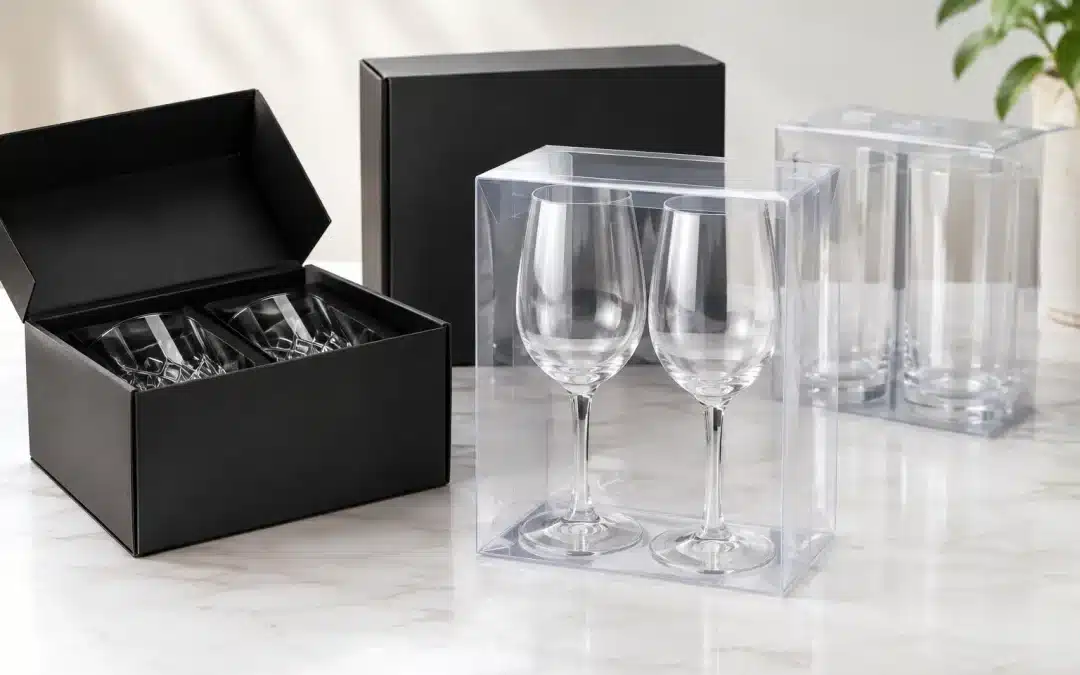
For most glassware gifting projects, black cardboard boxes and clear transparent boxes are the two most practical ready-made formats. Neither is universally better. Their value lies in matching the box to the sales environment and the intended impression.
Black card boxes for a polished gift finish
Black card stock boxes are a dependable choice when you want a classic, understated presentation. They work particularly well for wine glasses, whisky glasses, tumblers, beer glasses and decanter sets where the recipient is opening a considered gift rather than selecting an item from a visual retail display.
The dark finish gives the glassware a more premium frame and can suit corporate colours, formal events and wine-related gifting. It also keeps attention on any branded decoration, ribbon, label or accompanying bottle. For a business assembling gift packs at scale, black boxes are straightforward to store, pack and present consistently.
Their main trade-off is visibility. The recipient cannot see the glass inside without opening the box, so the outer presentation needs to do more of the selling. This is rarely an issue for staff gifts, direct mail packs or event handouts, but it can matter in retail spaces where customers compare products quickly.
Clear boxes for retail display and product visibility
Transparent PVC or PET boxes put the glassware on show. They are particularly effective for decorated glasses, coloured print, unusual shapes and products with a strong visual identity. For retail counters, wedding tables, hospitality merchandise and promotional displays, the ability to see the item can make buying easier.
Clear packaging is also useful where customers need confidence about what they are receiving. A printed gin glass, a pair of champagne flutes or a set of shot glasses can be inspected without the box being opened. This helps maintain a neat display and reduces unnecessary handling.
The trade-off is that clear packaging shows everything, including fingerprints, packing inconsistencies and any untidy insert material. It needs careful assembly to look its best. It may not offer the same formal gift-box feel as black card, although it can create a clean, modern presentation when the glass is the hero.
Match the Box to the Glass and the Occasion
The best packaging choice is usually made by starting with the use case, not the material. A black cardboard box and a clear box can both suit the same glass, but they create different buying experiences.
Stemmed wine glasses and champagne flutes need particular attention because height and stem shape affect the required internal space. A close, suitable fit helps the glass sit neatly and avoids the box looking oversized. For a wedding or winery gift, black packaging often creates a refined reveal. For a retail display featuring personalised flutes, clear packaging may be more persuasive.
Stemless wine glasses, beer glasses, whisky glasses and water tumblers are often easier to package because their shape is more compact. They work well in either format. Think about whether the buyer should see the print or engraving immediately. If so, transparent packaging deserves serious consideration.
Shot glasses are small, but they should not be treated as an afterthought. They are frequently used for spirit promotions, wedding favours and gift sets, where a tidy presentation can make a modest item feel considered. Likewise, decanters and carafes need packaging selected around their wider profiles and handles, not simply their height.
When a glass is paired with a bottle, the packaging decision becomes more specific. Some buyers package the components separately within a larger gift arrangement, while others use glassware boxes as a polished part of the overall set. Measure every component before committing to a format. A rushed fit can undermine an otherwise strong campaign.
The Ordering Details That Prevent Problems Later
Packaging purchasing is often decided on price per unit, but the cheapest box is not always the most cost-effective option. A box that is quick to assemble, fits correctly and presents consistently can save time across hundreds of packs. This matters when an event deadline or promotional launch is close.
Start with a physical sample of the actual glassware wherever possible. Product dimensions listed by a manufacturer are useful, but the real item may have a wider rim, thicker base or different stem profile than expected. Testing the glass in the box lets you assess how it sits, how easily it can be removed and whether the finished result feels appropriately premium.
For larger runs, consider whether custom-made packaging will add value. Custom options can help accommodate unusual glass shapes, larger quantities, specific presentation requirements or a branded campaign. They are generally more suitable when order volumes justify the extra setup and planning. Ready-made boxes are often the better choice for shorter runs, urgent requirements or standard glassware sizes.
Lead time should be part of the decision from the beginning. If glasses need printing, boxes need assembly and gift sets need packing before an event, leave room for each stage. Fast turnaround is valuable, but it works best when dimensions, quantities and packaging format are confirmed early.
A Practical Standard for Choosing Well
A strong glassware package should look intentional from the first glance. It should fit the glass neatly, suit the selling environment and be manageable for your team to assemble. For a premium corporate gift, that may mean a black card box with a simple, professional finish. For a retail-ready promotional glass, it may mean a clear box that lets the product speak for itself.
WineBox supplies ready-made black cardboard and clear transparent glassware boxes for a broad range of glass shapes, with custom-made options for larger orders. The useful starting point is not a generic box size. It is your glassware, your quantity, your deadline and the moment you want the recipient to remember.
Choose packaging that makes the handover feel complete. When the box suits the product and occasion, the glassware does not merely arrive safely – it arrives ready to be given.