
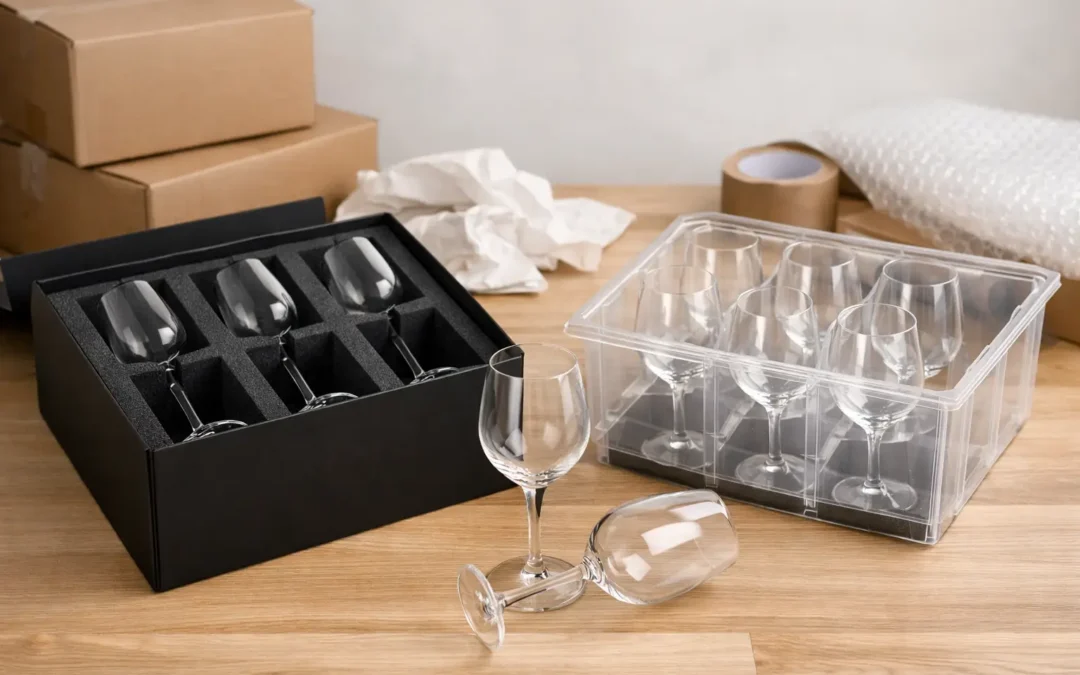
A wine glass can look premium on its own, but the wrong packaging quickly makes it feel awkward, risky or unfinished. If you are asking what box fits wine glasses, start with the glass dimensions, then choose a box format that protects the bowl and stem while giving the finished gift or retail set the presentation it deserves.
For corporate gifting, winery merchandise, wedding favours and promotional packs, the best box is not simply the one the glass can squeeze into. It should hold the item securely, allow room for protective packing where needed and suit the way the recipient will see, carry and open it.
What Box Fits Wine Glasses Best?
Most wine glasses fit best in a purpose-sized single or twin glassware box with enough internal height for the full glass, including the stem and base. The ideal fit is close rather than loose, but not so tight that pressure is placed on the bowl, rim or base.
Measure the glass at its widest point, then measure its overall height from the bottom of the foot to the rim. For a single glass, allow a small clearance around the widest point and above the rim. This space gives you room for tissue, foam or a cardboard insert where extra protection is needed. A box that is too large may let the glass move during handling, while one that is too small can create breakage before it reaches the customer.
For sets of two, choose a twin glass box with separate compartments or an internal divider. Two glasses placed loose together can knock against each other in transit, particularly with fine stems. A divided format also looks more deliberate when the box is opened, which matters for gift packs, retail displays and event presentation.
The glass shape matters as much as its stated capacity. A tall flute, broad red wine glass and stemless tumbler may all hold a similar volume but need very different box dimensions.
Start with accurate measurements
Measure each glass before ordering packaging, especially if it is sourced from a different supplier or production run. Record the total height, maximum bowl width and base diameter. If glasses are supplied in pairs, also check how they sit side by side.
Do not rely only on a product description such as “450 ml wine glass”. Capacity does not tell you whether the bowl is wide, whether the stem is tall or whether the base is oversized. These details determine whether the glass sits safely in the box.
It is also worth considering whether the glass will be packed with anything else. A wine bottle, gift card, coasters, printed tissue or branded insert can all change the packaging requirement. In those cases, a standard glass-only box may not be the right solution, even if it technically fits the glass.
Match the Box Style to the Occasion
The material and finish should support the purpose of the pack. For many business orders, black cardboard glassware boxes provide a professional, economical option that suits corporate gifts, promotional products and retail presentation. They are practical to store, easy to assemble and provide a clean backdrop for a wide range of glass styles.
Clear PVC or PET boxes are often chosen when the glass itself is the feature. They allow customers or event guests to see the shape, print and quality of the glass without opening the packaging. This can work particularly well for branded wine glasses, champagne flutes, beer glasses and personalised wedding glassware.
A transparent box is not always the best choice. If the glass needs a more premium reveal, or if branded tissue and an insert form part of the presentation, black card stock can create a stronger unboxing experience. It can also be more forgiving where glassware has small variations in shape or decoration that do not need to be on display before the box is opened.
For high-volume promotional orders, the most suitable option is often the one that balances protection, presentation and packing speed. A beautiful box that takes too long to assemble can add unnecessary labour to a large campaign. Conversely, a basic box that offers little stability can create costly breakages or disappoint recipients.
Choose by Glass Type, Not Just “Wine Glass”
Wine glass packaging is often used across a broader glassware range, but each item needs its own fit. A box selected for a standard stemmed wine glass may not suit a wide gin goblet or a heavy whisky tumbler.
- Stemmed wine glasses need height for the stem and bowl, plus protection around the rim and foot.
- Stemless wine glasses usually need a shorter, wider box and benefit from a snug internal fit to prevent rolling.
- Champagne flutes need taller packaging with careful clearance at the rim, as their narrow profile can make them appear more protected than they are.
- Beer glasses and tumblers often need a stronger base area because of their weight and straight-sided shape.
- Decanters, carafes and oversized gin glasses usually require a custom-sized format or internal support due to their broader profiles and uneven shapes.
For event packs, it is sensible to test-pack one complete set before committing to a large order. Include every component that will be presented to the recipient, not just the glass. This simple check can prevent an issue where an otherwise suitable box becomes too tight once ribbon, cards or additional gift items are added.
Protection Is Part of Presentation
A glassware box should look polished, but it also has a practical job to do. The box needs to keep glassware stable through packing, dispatch, transport and handover. That is particularly relevant for corporate campaigns sent to multiple locations, wedding orders carried to a venue, or gift businesses packing sets for customers.
Internal dividers are useful for pairs and multipacks because they separate glass surfaces. Tissue paper can reduce movement and improve the opening experience, while a fitted insert can be worthwhile for delicate, high-value or unusually shaped pieces. The level of protection depends on how the package will travel.
For example, a single wine glass handed directly to a guest at an event may need less internal protection than the same item being couriered interstate. If boxes will be shipped, remember that the gift box is usually not the outer shipping carton. Pack the finished gift box inside a suitable transit carton with protective void fill. A clear display box, in particular, should not be expected to absorb the knocks of freight handling on its own.
When a Standard Box Is Enough
Ready-made boxes are a practical choice when your glassware dimensions match an available format and you need an efficient, cost-conscious solution. They suit standard wine glass gifts, cellar door merchandise, wedding favours, staff recognition gifts and smaller retail runs. The benefit is speed: there is no need to develop a package from scratch when a proven size does the job well.
Standard packaging also makes sense when the main objective is neat, safe presentation rather than detailed brand storytelling. Add a printed card, ribbon, sticker or enclosed message if you need a branded touch without moving to a fully custom box.
When Custom Glassware Packaging Makes Sense
Custom packaging becomes more valuable when the glass shape is unusual, the order volume is substantial or the packaging needs to carry your brand. It is also the better route for curated packs that combine wine glasses with a bottle, accessories or promotional items.
A tailored box can be made around the exact dimensions of your glassware, with dividers or inserts designed for the contents. This reduces excess movement and creates a more considered presentation. For wineries, agencies and corporate teams, custom packaging can turn a branded glass from a useful giveaway into a gift that feels properly finished.
There is a trade-off. Custom solutions generally require more planning, minimum quantities and approval time than ready-made packaging. They are most effective when the same glassware is being used across an ongoing program, a major event or a retail range, rather than for a one-off small order.
A Quick Fit Check Before You Order
Before finalising a box, place the glass upright and confirm that the lid closes without touching the rim. Check that the foot sits flat, the widest section has sensible clearance and the glass cannot shift excessively once packed. For twin packs, make sure the two pieces are separated and that the divider remains secure when the box is lifted.
Also consider the final moment: will the recipient immediately understand what is inside, and does the box suit the value of the gift? A clear box can showcase branded glassware at a glance, while a black card box can make a simple presentation feel more premium and intentional.
WineBox can help match ready-made black card or clear transparent glassware boxes to your product dimensions, or discuss a custom option for larger branded orders. Bring the measurements, the intended quantity and a clear idea of how the finished pack will be used. That is the quickest way to select packaging that protects the glass and gives every gift the professional finish it should have.