
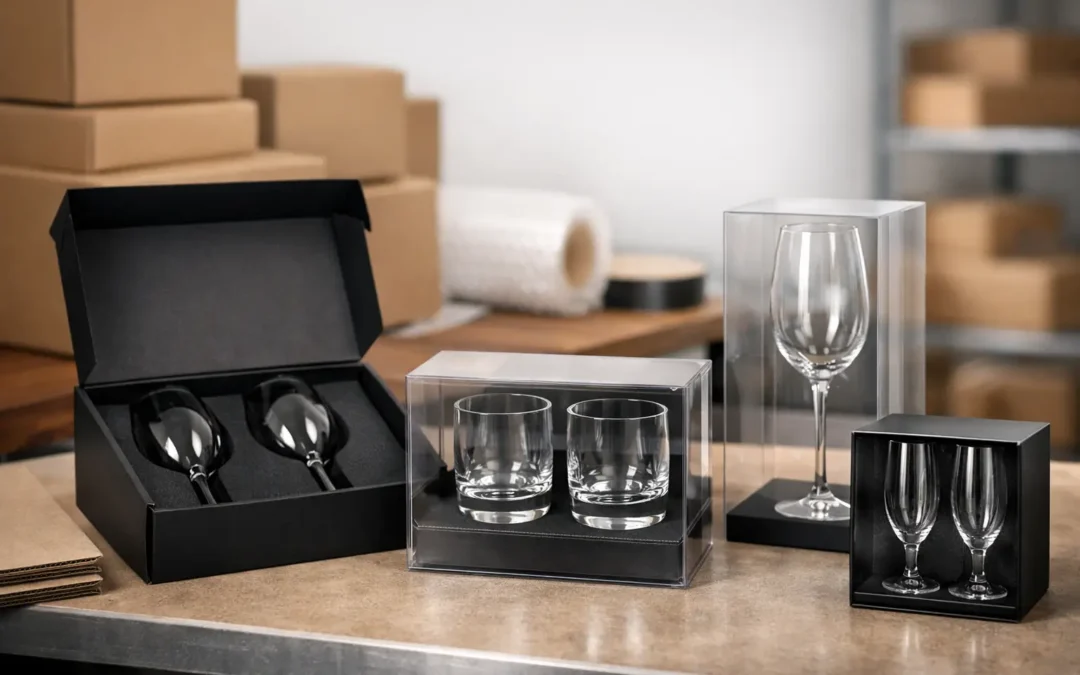
A wine glass that looks perfect on a shelf can become difficult to pack once its stem, bowl and base are measured together. The right box needs to protect the glassware, present it professionally and leave enough room for easy packing without looking oversized. This glassware packaging size guide helps you choose a practical fit for gift packs, retail displays, promotional merchandise and event orders.
For business buyers, packaging size affects more than appearance. A poorly fitted box can slow down assembly, increase breakage risk and make a premium glass feel less valuable. For personal gifts and wedding favours, the same principle applies: the box should feel considered, not improvised.
Start With the Full Glassware Measurements
Always measure the actual glass, not the dimensions shown on a supplier listing alone. Manufacturer measurements can vary slightly, particularly across imported glassware ranges. If you are packing a mixed order, measure the largest item in the set.
Record the glassware’s maximum height, maximum width and maximum depth. For a round tumbler or stemless wine glass, width and depth are usually the same. For a handled beer glass, cocktail glass, decanter or carafe, they may be very different. Measure from the widest point, including handles, rims, feet and any unusual shape in the glass.
For stemmed glassware, height is only part of the picture. A large wine glass may have a narrow bowl but a wide base, while a champagne flute can be tall and slim. The internal box size must accommodate both the bowl and the base without forcing the glass into the carton.
When choosing a box, work from its internal dimensions. External dimensions include the thickness of the card or plastic and do not tell you how much usable room is inside.
How Much Space Should a Glassware Box Allow?
A close fit is generally best, but not a tight fit. As a practical starting point, allow a small clearance around the glass so it can be placed in and removed from the box comfortably. The amount of clearance depends on the packaging material and whether you are adding tissue paper, shredded paper, a foam insert or a printed card.
For simple black cardboard or clear PET and PVC gift boxes, a little extra room is useful for packing material and straightforward assembly. Too much empty space, however, lets the item move during transport and can make a single glass look lost inside a large box.
A good fit should let the glass sit upright without pressure on the rim, stem or base. If the glass needs to be angled sharply to enter the box, choose the next size up. If it slides around after packing, add suitable protective fill or move to a smaller format.
Allow for Packaging Materials
Tissue paper adds modest bulk, but it is often enough to change the box size you need for a wide-bowled wine glass or a decanter. Shredded paper requires more room and is best suited to boxes with deliberate clearance. Foam inserts and moulded protective components provide stronger support but need to be designed around the item dimensions.
If your gift set includes a branded note, wine accessory, coaster or small bottle, measure the complete presentation rather than the glassware in isolation. This is particularly relevant for corporate gifts, cellar door packs and retail bundles where the box needs to hold several pieces neatly.
Glassware Packaging Size Guide by Product Type
Wine glasses and champagne flutes
Stemmed wine glasses need a box that protects the bowl and stops the stem from taking the weight of the item. Select a height that allows the glass to sit naturally upright, then confirm the internal width suits the widest part of the bowl and foot.
Champagne flutes are often taller than standard wine glasses, so do not assume a wine glass box will fit. A flute may require more vertical clearance even when its bowl is narrow. For a pair of glasses, consider whether they will sit side by side or require a divider. Side-by-side presentation is popular for celebrations, weddings and bottle-and-glass gift sets, but the divider needs to prevent the glasses from touching.
Stemless wine glasses and tumblers
Stemless wine glasses, whisky tumblers and water glasses are generally easier to size because of their compact shape. Their wide rims can still create issues, particularly with modern oversized tumblers that taper towards the base.
Measure the rim rather than relying on the base diameter. If the glass is widest at the top, the carton needs to suit that measurement. A clear box can be a strong choice when the design or print on the glass is part of the presentation, while a black card box creates a more understated premium finish.
Beer glasses and handled mugs
Beer glasses range from tall schooner-style shapes to stout, wide tumblers and handled glass mugs. Handles are the main sizing consideration. Leave enough internal width and depth so the handle does not press against the box wall, particularly if the pack will be freighted or stacked.
For promotional beer glass orders, make a sample pack before committing to the full quantity. This checks not only the physical fit but also how quickly your team can pack the product. A box that is technically suitable but fiddly to assemble can add unnecessary labour to a campaign or event deadline.
Shot glasses and spirit glasses
Shot glasses are compact, but their packaging should still be sized carefully. A tall, narrow shot glass may need more height than expected, while heavy-bottomed spirit glasses benefit from a snug base and light protective wrapping.
These products are commonly sold in pairs, sets of four or as part of a gin, vodka or whisky gift pack. For multi-glass sets, dividers or individual compartments are usually more practical than one large open box. They keep the presentation tidy and reduce glass-on-glass contact.
Decanters and carafes
Decanters and carafes require the most careful measurement because their shapes vary widely. Wide bases, narrow necks, pouring lips and stoppers all affect the final box size. Measure with the stopper fitted if it will be packed with the decanter.
Do not rely on height alone. A low, broad decanter can need a larger carton than a tall carafe. Where the item has a particularly distinctive shape, custom-made packaging may be a better commercial choice for larger runs. It can improve protection, create a more polished retail result and reduce the need for excessive void fill.
Choose the Box Material for the Job
Size and material work together. Black cardboard glassware boxes are a practical, economical option for corporate gifting, retail packing and event presentation. They offer a clean finish and can help conceal protective tissue or inserts for a more refined unboxing experience.
Transparent PET or PVC gift boxes suit products where visibility sells the item. They allow customers and recipients to see etched, printed or coloured glassware before opening the pack. They are especially useful for wedding favours, branded promotional glasses and display-ready retail gifts. Clear boxes do show every detail, so packing must be neat and the glassware should be clean and presentation-ready.
The best option depends on what the recipient needs to see, how far the product will travel and whether branding is being added. For a premium campaign or high-volume retail program, custom packaging can be worthwhile. For smaller orders or quick turnaround needs, ready-made sizes often provide the most efficient result.
Test the Pack Before Placing a Large Order
A sample test avoids expensive surprises. Pack the glassware exactly as it will be supplied, including tissue, inserts, labels, gift cards and accessories. Close the box fully, then check whether the item moves when gently handled.
Review the pack from the customer’s perspective as well. Does the glass sit straight? Does the box close cleanly? Is the product visible where it should be? For retail or promotional orders, also consider outer shipping cartons. A well-sized gift box still needs suitable protection when travelling by courier or being moved between venues.
For larger orders, confirm the final glassware sample before production. Small variations between glass batches can affect fit, especially with handmade or specialty pieces. This simple check is one of the easiest ways to protect your budget and delivery schedule.
When Standard Sizes Work and When Custom Makes Sense
Ready-made glassware boxes are ideal when your product dimensions suit an available format and you need an efficient, cost-conscious solution. They work well for common wine glasses, tumblers, beer glasses and standard gift packs.
Custom packaging becomes more valuable when the glassware is unusually shaped, your set includes multiple components or the presentation needs to carry your brand. A tailored box can be sized around a bottle and glass combination, a pair of champagne flutes or a decanter with accessories. It also gives more control over colour, print, inserts and the overall customer experience.
WineBox can assist with ready-made black card and clear glassware packaging, as well as custom-made solutions for larger quantities. Providing accurate internal measurements, product photos and your intended packing method will make the quoting process faster and help identify the most suitable option.
The best glassware box is not simply the smallest carton your product will fit into. It is the one that protects the item, looks right for the occasion and makes packing easy for everyone handling the order. Measure carefully, test a complete sample pack and choose a format that supports the value of the glassware inside.