
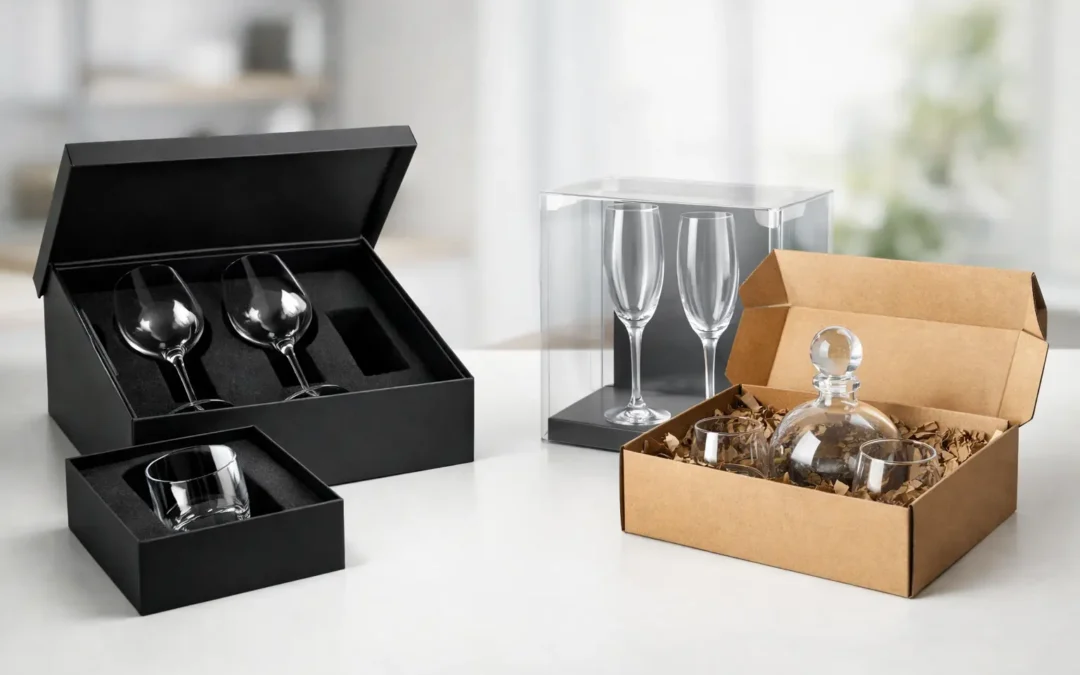
A premium wine glass, tumbler or decanter can lose much of its appeal if it is handed over in unsuitable packaging. The custom vs ready-made packaging decision comes down to more than appearance. It affects your order timing, unit cost, branding opportunities and how confidently your glassware can be presented for sale, gifting or an event.
For a one-off corporate gift, a wedding favour run or a retail promotion, the best option is the one that makes the glassware look considered while keeping ordering practical. Ready-made boxes offer a fast, economical solution. Custom packaging gives larger campaigns a more tailored finish. Knowing where your project sits makes the choice much easier.
Custom vs Ready-Made Packaging for Glassware
Ready-made packaging is produced in standard formats and is available for immediate ordering. For glassware, this commonly includes black cardboard gift boxes and clear transparent PVC or PET boxes designed to display and protect a range of glass shapes. They provide a polished presentation without the cost or lead time of developing a box specifically for your brand or product.
Custom-made packaging is planned around the requirements of a particular order. Depending on the project, that may mean custom sizing, printed branding, a particular presentation format or packaging designed to suit a specific glassware and bottle combination. It is usually the better fit where quantity, campaign value and brand visibility justify a more involved production process.
Neither option is automatically better. A retailer launching a limited gift range may need stock quickly and benefit from a standard box. A winery preparing a major Christmas campaign may gain more from packaging that carries its own brand identity. The right answer depends on the role the packaging needs to play.
When Ready-Made Boxes Are the Smart Choice
Ready-made boxes are a practical choice when speed and budget are high priorities. They remove the design and production steps involved in custom work, allowing you to focus on selecting glassware, packing the product and getting it to customers or guests.
Black card stock boxes are a popular option for businesses that want a clean, professional look. The neutral finish suits wine glasses, beer glasses, whisky tumblers, champagne flutes, shot glasses and spirit glass sets. It also works well when the product itself is doing the visual work, such as an etched logo on a glass or a branded ribbon, label or gift tag added separately.
Clear PVC or PET packaging serves a different purpose. It puts the glassware on display before the recipient opens the box. This can be particularly effective for retail shelves, promotional merchandise, wedding favours and curated gift sets where the glass design, print or decoration is an important part of the sale. A clear box can help customers see exactly what they are buying while still giving the item a gift-ready finish.
Standard packaging is also useful for smaller or uncertain quantities. If you are testing a new product bundle, ordering gifts for several staff members or putting together a short-run event pack, committing to a custom production run may not be commercially sensible. Ready-made boxes let you order according to immediate demand and keep your upfront spend under control.
That does not mean standard packaging looks generic. Selecting a format that fits the glassware well, using consistent packing materials and adding your own printed insert or card can create a presentation that feels intentional. For many business gifts, the quality of the glass and the care in the final presentation matter more than printing every surface of the box.
When Custom Packaging Is Worth the Investment
Custom packaging becomes more valuable when the box is part of the brand experience, rather than simply a way to transport glassware. If your organisation is distributing hundreds of promotional gift sets, selling a premium glassware range or sending high-value client gifts, the packaging has more time to make an impression.
A tailored format can support the exact dimensions and contents of your set. This matters when packing a carafe with matching glasses, a decanter with tumblers, or a bottle alongside stemless wine glasses. A box that is planned for the combination can look more cohesive and can help prevent the items from moving around during handling.
Branding is another major reason to choose a custom solution. A company logo, campaign message, event artwork or product story can turn the packaging into a visible part of the promotion. For wineries, hospitality venues and corporate marketing teams, this extra presentation layer can reinforce why the recipient received the gift and where it came from.
Custom work is generally best suited to larger order volumes because setup, artwork approval and production are shared across more units. The cost per box can become more attractive as quantities increase, but it is still important to look at the full project value, not just the unit price. Consider the sales value of the set, the expected lifespan of the campaign and whether the packaging will help the product stand out in a competitive setting.
Allow more time for a custom project. Artwork needs to be finalised, dimensions confirmed and production scheduled before packing can begin. If the event date is fixed, such as a conference, product launch or end-of-year gifting deadline, start the conversation early. A rushed custom order can limit choices, while early planning gives you more control over finish, format and delivery timing.
Match the Box to the Gifting Occasion
The occasion often points to the right level of packaging. For wedding favours or personal gifts, a ready-made clear box can provide an elegant display with minimal organisation. Add a name tag, ribbon or small thank-you card and the presentation is complete without requiring custom production.
For corporate gifts, think about what the recipient will see first and what they will keep. A black card box can feel suitably professional for branded beer glasses, wine glasses or whisky sets, particularly when the glassware itself carries the company mark. If the campaign is intended to build brand recognition at scale, custom packaging may deliver a stronger return by carrying the message beyond the glass.
Retailers need to balance shelf appeal with stock management. Transparent packaging can be valuable where customers want to inspect the product, while black packaging can suit a more premium or understated range. A custom box may be worthwhile for a signature product line, but standard packaging can help you react quickly to seasonal demand and replenish stock without extended lead times.
For promotional product resellers and event planners, operational simplicity is often decisive. You may be coordinating venue access, printed glassware, freight and assembly at the same time. Using ready-made boxes can reduce the number of variables in the project. On the other hand, if the packaging is a central part of a large branded activation, custom packaging should be considered at the initial quotation stage rather than left until the end.
Do Not Judge Packaging by Looks Alone
Glassware packaging must present well, but it must also suit the product. Check the height, bowl or rim width, base diameter and overall shape of the glass before choosing a format. A tall champagne flute and a short whisky tumbler may both be glassware, but they need very different box proportions.
Also consider how the box will be packed and moved. Will individual boxes be placed into a larger carton for delivery? Will staff assemble gift sets on site? Are bottles, cards or other items being added? A visually appealing box that complicates packing can create unnecessary labour costs and delays.
Protection is particularly relevant for carafes and decanters, which can have unusual shapes and need more careful handling. If a standard box does not provide an appropriate fit for the item or set, a tailored packaging approach may be the safer commercial decision. The aim is not to over-package a product, but to give it the support and presentation it requires.
Ask These Questions Before You Order
Start with the quantity. A small order or quick turnaround normally points towards ready-made packaging, while a larger repeatable order can make custom production more viable. Then consider whether your brand needs to appear on the outer box, or whether branded glassware and an insert card will achieve the desired result.
Next, confirm exactly what must fit inside. Measure the glassware and account for any extras, including a bottle, gift card, ribbon or protective packing. Finally, work back from your required delivery date. This is especially important for Christmas, major corporate events and wedding season, when lead times and packing schedules can be under greater pressure.
A good packaging choice should make your gift set easier to sell, simpler to assemble and more satisfying to receive. Whether you choose economical ready-made boxes or a custom solution for a larger campaign, begin with the glassware, the occasion and the quantity. From there, the most suitable presentation usually becomes clear.