
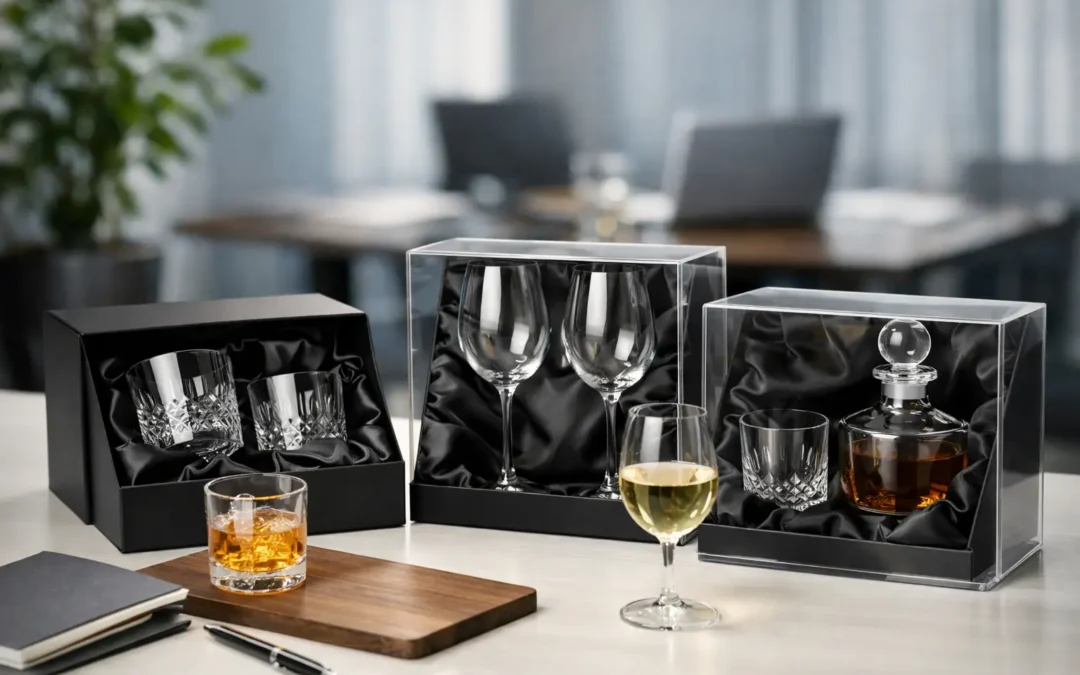
A corporate gifting case study is most useful when it shows what happens between choosing a gift and handing it over. For glassware, that gap matters. A branded wine glass, tumbler or decanter may be a quality item, but without the right box it can arrive looking like loose stock rather than a considered corporate gift.
This example follows a typical Australian promotional order: a business preparing end-of-year gifts for key clients and staff. The aim was straightforward – create a gift that looked professional, travelled safely and could be packed efficiently without pushing the budget into premium hamper territory.
The Brief: Make Branded Glassware Gift-Ready
The buyer had selected a pair of stemless wine glasses, each printed with the company logo. They wanted to include a bottle of wine separately and present the glasses as the lasting part of the gift. The gifts were to be distributed at a client event, with remaining units sent to interstate contacts after the function.
The challenge was not sourcing the glasses. It was turning them into a presentation-ready item at a scale that suited a corporate order. Plain wrapping was too slow and offered little protection. Generic cartons looked functional but did not match the quality of the branded glassware. A fully custom printed box was attractive, but the order quantity and lead time did not justify the added setup and production costs.
That trade-off is common in corporate gifting. The best packaging is not always the most elaborate option. It is the option that protects the product, supports the occasion and gives the recipient a positive first impression without making fulfilment difficult.
Packaging Options Considered
The buyer considered black cardboard glassware boxes and clear transparent PET or PVC boxes. Both options could suit the gift, but they create different visual results.
A black card stock box gives the glasses a more formal, premium presentation. It works particularly well when the gift is intended for executive clients, award recipients or staff recognition. The dark finish provides a clean backdrop for a ribbon, sticker or branded gift tag, while keeping the glassware protected from handling before the event.
A clear box allows the recipient to see the product immediately. This can be a strong choice for promotional merchandise, retail-style displays and gifts where the printed artwork on the glass is the main feature. Clear packaging helps the logo, glass shape and contents do the selling before the box is opened.
For this order, the business chose black cardboard boxes. The client gifts were being placed on a registration table before a dinner, so a consistent, polished appearance mattered more than product visibility. The wine glasses were packed as pairs, with protective material selected to minimise movement during transport.
What Changed Once the Box Was Added
The difference was visible before the first gift was opened. Instead of two printed glasses being handed over in protective wrap, each recipient received a compact boxed set that felt complete. The business had not changed the glassware itself. It had changed how the gift was perceived.
This is where packaging can add commercial value. A well-fitted glassware box helps the recipient understand that the item was selected for them, rather than pulled from general event stock. It also gives staff distributing the gifts confidence that the product is presentable and less likely to be damaged in the process.
For the event team, boxed sets were easier to count, stack and move from storage to the venue. The gifts could be organised by recipient group and set aside for people unable to attend. That may sound minor, but event days have enough moving parts. Packaging should reduce handling issues, not create another job for the organiser.
The business also found the boxed format useful after the event. A small number of sets were couriered to interstate clients. Because the glasses had already been secured in their individual gift boxes, the team had a better starting point for outer shipping cartons. The gift box is not a substitute for suitable transit packaging, but it adds an important layer of product protection and presentation.
Corporate Gifting Case Study: The Practical Lessons
The main lesson from this corporate gifting case study is that the packaging decision should be made alongside the glassware decision, not after it. Waiting until the glasses arrive can limit box choices, create rushed packing work and leave little time to test whether the product fits securely.
Start with the glass dimensions and the intended configuration. A single whiskey glass, a pair of champagne flutes and a carafe with accompanying glasses all need different packaging considerations. Stemmed glassware needs particular care around bowl and stem height, while tumbler and beer glass packs may require a different internal layout to keep each item stable.
The gifting occasion should guide the finish. Black boxes are a dependable option when the goal is a refined corporate look, especially for client appreciation, winery gifts, conference speakers and employee milestone packs. Clear boxes are often better where product visibility supports the promotion, such as point-of-sale displays, branded merchandise packs or wedding favours.
Quantity and lead time also affect the right answer. Ready-made packaging can be a practical, cost-effective solution for many small to medium corporate runs. Larger volumes may justify custom-made packaging where specific dimensions, colours or branding are required. Neither approach is automatically better. It depends on the gift, the budget, the quantity and how the product will be distributed.
Planning a Glassware Gift Order Without the Rush
The strongest corporate gift programs allow time for a sample fit check. This is especially valuable when combining glassware with bottles, printed inserts, gift tags or other components. A box that looks suitable on paper may need a different size or internal arrangement once every element is in place.
It also pays to map the handling journey. Will the gifts be collected from an office? Packed into event bags? Displayed on tables? Sent individually by courier? The answers influence the box style, packing method and amount of protective outer packaging needed. A clear box that works beautifully on a display table may need different handling precautions from a black cardboard box being placed into a larger gift hamper.
For businesses ordering branded glasses through a promotional products supplier, share the final glass specifications early. Height, diameter, shape and whether the item is stemmed all affect the packaging fit. Supplying this information early can help avoid unnecessary repacking, damaged stock or a box that fails to present the product properly.
WineBox supports businesses, event planners and gift suppliers with ready-made black cardboard and transparent glassware boxes for wine glasses, beer glasses, tumblers, champagne flutes, shot glasses, carafes and decanters. For larger projects, tailored packaging can provide a closer fit and a more specific presentation outcome.
A Better First Impression Starts Before the Gift Is Opened
Corporate gifts are often judged in seconds. The recipient notices the weight, finish and care taken in the presentation before they assess the logo on the glass or the message on the card. Packaging cannot compensate for a poor-quality gift, but it can make a good glassware choice feel deliberate, protected and worth keeping.
When planning your next client, staff or event gift, treat the box as part of the product rather than an afterthought. The right format can keep glassware safer, make packing easier and give every recipient a gift that looks ready for the occasion.