
A rushed packaging order can turn a well-planned promotion, winery gift set or wedding favour into a last-minute problem. Custom order turnaround is not simply about how quickly boxes can be produced. It depends on having the right glass dimensions, quantity, artwork, approvals and delivery timing confirmed before production begins.
For businesses ordering presentation-ready packaging for wine glasses, beer glasses, tumblers, champagne flutes, shot glasses, decanters or carafes, the best result comes from planning the box around the product and the occasion. A tailored box should protect the glassware, present it professionally and arrive when your campaign, event or retail launch needs it.
What affects custom order turnaround?
Custom packaging involves more moving parts than ordering a ready-made black cardboard or clear transparent box. Standard options can be an efficient choice when your glassware fits an available size and you need packaging promptly. Custom-made boxes are ideal when brand presentation, unusual glass shapes, specific inserts or higher volumes justify a made-to-order solution.
The turnaround time for a custom order is shaped by four practical stages: confirming the packaging specification, preparing artwork, approving a production proof and allowing time for manufacture and freight. A delay at any stage can affect the final delivery date, particularly around major retail periods, weddings and year-end corporate gifting.
Quantity matters too. Larger runs can make custom sizing and printing more cost-effective per unit, but they also need clearer planning. A small order may suit an existing box style, while a larger promotional programme may benefit from packaging designed around a particular glass, bottle-and-glass bundle or branded gift set.
The product dimensions come first
Glassware is rarely as simple as its stated capacity. Two 450 ml wine glasses can have very different bowl widths, stem heights and base diameters. A tumbler may have a thick base, a decanter may have a wide shoulder, and a champagne flute needs enough height and internal clearance to avoid pressure on the rim.
Before requesting a quote, measure the actual item rather than relying on an online product description. Record the maximum height, width and depth, then consider whether the glass will be packed individually, as a pair or with other items. If a bottle, card, accessory or branded insert will sit in the same gift pack, those dimensions must be included from the start.
Choosing a box that is too tight risks breakage and an awkward unboxing experience. Choosing one that is too large can make the contents shift during handling and can increase material and freight costs. Good packaging is a balance between protection, presentation and practical packing speed.
Plan your custom order turnaround backwards
The most reliable way to organise a custom packaging order is to work backwards from the date you need the boxes in hand. This is more useful than working from an event date alone. If staff need to assemble gift packs, apply labels or distribute orders across several locations, build those tasks into the schedule as well.
For example, a corporate team may need gift boxes ready before a client event, but still require several days to place branded glassware and bottles into each pack. A winery preparing cellar-door merchandise may need stock delivered before a seasonal promotion begins. A wedding planner might need favours packed well ahead of the day, not delivered the week of the ceremony.
Start by identifying your non-negotiable in-hand date. Then allow time for production, delivery to your location, packing and distribution. Add a buffer for approval changes or freight disruptions, especially when stock is travelling to regional locations or multiple Australian cities.
Allow time for artwork and approval
Artwork is often where custom orders slow down. A logo file that looks sharp on a screen may not be suitable for print production. Low-resolution images, incorrect colours, missing fonts and artwork supplied in the wrong format can all create avoidable back-and-forth.
Provide your logo and print requirements as early as possible. Be clear about the brand colours, placement, print areas and whether the packaging needs to match existing promotional materials. If the box is intended for retail shelves, consider what customers will see from the front, side and top panel rather than treating the logo as an afterthought.
A proof approval is a key checkpoint, not a formality. It is the opportunity to confirm spelling, colours, logo position, box dimensions and any special features before production proceeds. Allocate time for the right person in your business to review and sign off. Waiting for approval from several stakeholders is one of the most common causes of a delayed custom order turnaround.
Choose the right packaging route for the deadline
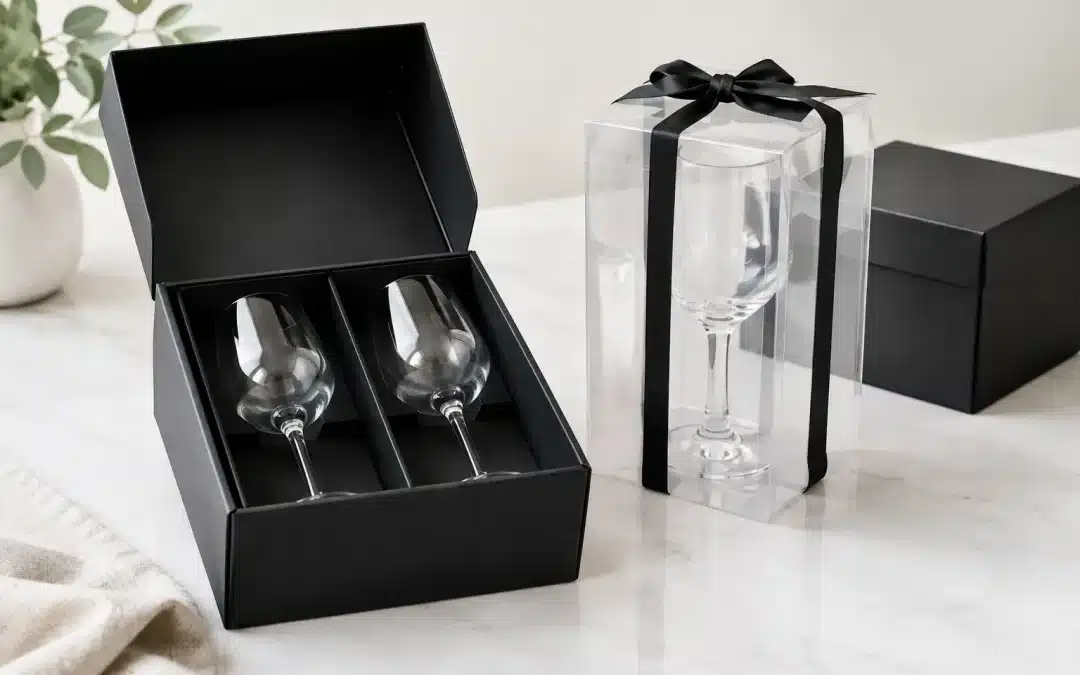
Not every project needs a fully customised box. If the priority is fast, polished presentation for standard glassware, ready-made black card stock boxes and clear PVC or PET gift boxes are often the sensible route. They give retailers, event organisers and gift businesses a professional finish without the extra design and production stages of a custom run.
Black cardboard boxes suit premium wine glasses, whisky tumblers, beer glasses and corporate gifts where an understated look works well. They can make the glassware feel considered and valuable, particularly when paired with tissue, an insert or a branded tag added during packing.
Clear transparent boxes are useful when the glassware itself is the hero. They allow customers to see the shape, print or decoration on the glass before opening the pack, which can work particularly well for retail display, wedding favours and promotional merchandise.
Custom packaging is worth considering when the standard fit is not right, your order volume is substantial, or branding needs to be incorporated into the packaging itself. It may also be the better commercial choice for a repeat programme where consistency matters across multiple deliveries. The right solution depends on your deadline, budget, order size and the level of presentation your customer expects.
Prevent delays before they happen
A clear brief helps suppliers quote accurately and identify potential issues early. Include the type of glassware, exact product dimensions, number of pieces per box, total quantity, preferred box material, branding requirements and delivery suburb. If you have a firm date, state it upfront rather than mentioning it after a quote has been prepared.
It also helps to finalise your glassware selection before confirming the packaging. Changing from a stemless wine glass to a taller stemmed style after the box has been specified can alter the whole project. The same applies when a gift set expands from one glass to two, or when a bottle is added after packaging design has started.
Keep decision-making focused. Nominate one contact person to consolidate feedback, approve proofs and confirm final quantities. This avoids conflicting instructions and keeps the project moving. For promotional product resellers and event agencies managing a client, this step is especially valuable because it protects the production schedule from late internal changes.
Delivery is part of the schedule
Production completion is not the same as delivery completion. Packaging still needs to travel safely to your warehouse, venue, retail location or fulfilment partner. Ensure the delivery address can receive cartons, has suitable access and is staffed during the expected delivery period.
If you are sending packed gifts onwards to clients or guests, factor in the weight and volume of finished packs. Glassware and protective packaging can add up quickly. A box that looks excellent on display also needs to be practical to store, assemble and distribute at scale.
For multi-location campaigns, consider whether packaging should be delivered to one central point for assembly or sent directly to several locations. Central packing gives more control over presentation. Direct delivery can reduce handling, but requires accurate forecasting and more coordination.
Get a clearer quote and a better result
A quality quote should be based on enough information to match the packaging to the job. Supplying photos of the glassware, a sample where appropriate, expected volumes and your target delivery date gives the supplier a stronger foundation than a request for “a box for wine glasses”. It also makes it easier to compare custom and ready-made options honestly.
Be open about where you have flexibility. If a certain box colour, print treatment or delivery date is preferred rather than fixed, say so. There may be a practical alternative that protects the presentation standard while helping the order stay on schedule and within budget.
For Australian businesses planning gift packs, promotional glassware or event presentation, packaging should be treated as an early project decision rather than the final item on the checklist. A well-prepared brief, realistic approval process and packaging format suited to the deadline will give you more choice and far fewer surprises when it is time to pack.
The best time to ask about a custom box is when the glassware and campaign are being planned, not when the event is already on the calendar. That early conversation gives your packaging room to do its job: protect the product, strengthen the presentation and arrive ready for the occasion.