
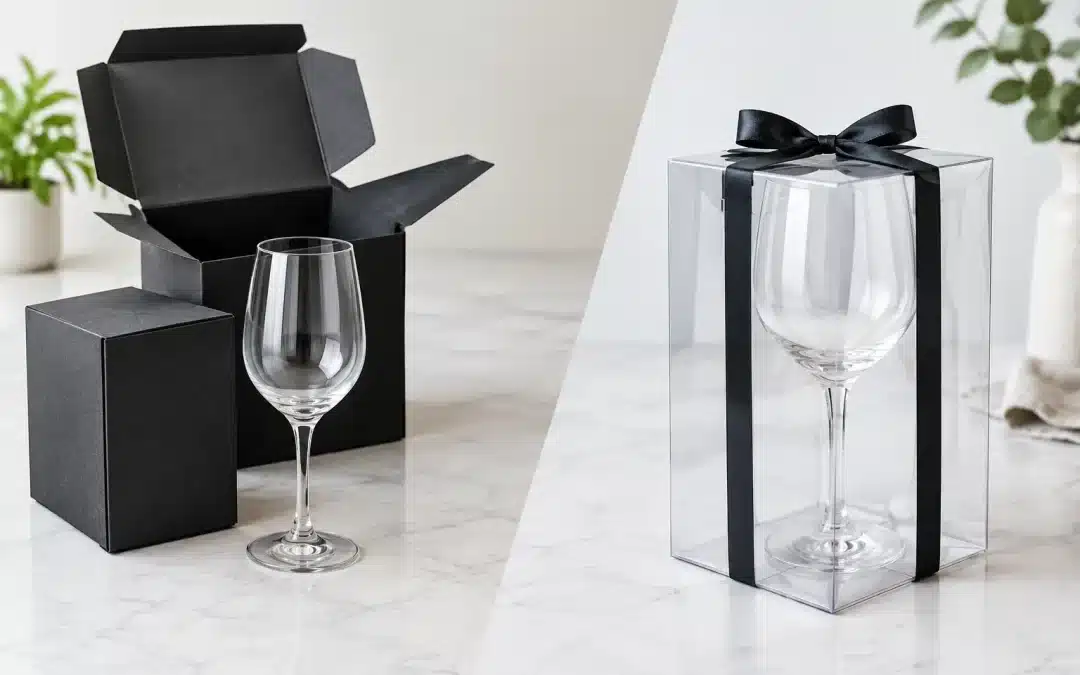
A premium wine glass can lose much of its impact if the packaging feels flimsy, difficult to assemble or unsuitable for the occasion. When comparing folding cartons versus rigid boxes, the right choice comes down to more than appearance. It affects your unit cost, freight, storage, lead time, branding options and, most importantly, how confidently your glassware reaches the recipient.
For corporate gifts, winery merchandise, wedding favours and retail glassware packs, folding cartons are often the practical commercial choice. Rigid boxes can create a more luxurious unboxing experience, but they are not automatically the better option. The best format is the one that suits the product, quantity, budget and expected presentation standard.
Folding cartons versus rigid boxes: the core difference
A folding carton is made from card stock or paperboard and supplied flat for storage and transport. It is folded into shape when required, usually with a tuck-end or locking base. Clear PET or PVC boxes also fall broadly into the folding packaging category, as they are supplied flat and formed before use.
A rigid box is made from thicker board, commonly wrapped in printed paper or a specialty finish. It is supplied fully formed and keeps its shape without folding. Think of the two-piece boxes often used for premium spirits, jewellery, luxury cosmetics or high-end corporate gifts.
Both can look professional. The key difference is that folding cartons prioritise efficiency and flexible presentation, while rigid boxes prioritise weight, structure and a luxury feel.
When folding cartons are the better fit
For most glassware packaging projects, folding cartons offer a strong balance of visual appeal and commercial value. They are particularly suited to businesses that need polished gift packaging without adding unnecessary cost or handling complexity.
Lower freight and easier storage
Flat-packed cartons take up far less room in a warehouse, stockroom or event storage area. This matters when ordering hundreds or thousands of boxes for a promotion, product launch or busy gifting period. A business can store flat cartons until glassware is ready to be packed, rather than finding room for bulky assembled boxes.
Lower cubic volume can also reduce freight costs. For organisations sending gift packs to multiple locations, that difference can add up quickly. Folding cartons are easier to move, easier to store and generally more efficient for fulfilment teams working at volume.
A practical option for branded campaigns
Folding cartons can provide a clean, retail-ready presentation for printed glassware, wine glasses, beer glasses, tumblers, champagne flutes and shot glass sets. A black card box gives a classic, premium look that works across corporate, hospitality and celebratory occasions. Clear packaging allows the product itself to remain the focal point, which is useful when the glassware carries a logo, etched artwork or coloured print.
For many promotional campaigns, the glassware is the hero. The box needs to protect it, present it well and support the brand without competing for attention. A straightforward carton does that effectively.
Faster, more economical for volume orders
If your order is driven by a fixed budget, a large guest list or a time-sensitive event, folding cartons are usually easier to justify than rigid boxes. They use less material and are generally more cost-effective to produce and freight.
That does not mean they need to look cheap. Box size, board quality, colour, window design and a well-fitted insert can all improve the finished result. A correctly selected folding carton can feel considered and professional, especially when it is designed around the shape of the glassware rather than treated as an afterthought.
Where rigid boxes have an advantage
Rigid boxes earn their place where the packaging is intended to be a lasting part of the gift. They are heavier, more substantial and often better suited to a high-value presentation where the recipient is expected to keep the box.
A winery releasing a limited-edition decanter set, for example, may choose a rigid box to reinforce exclusivity. A premium corporate gift featuring a bottle, two crystal glasses and custom accessories may also benefit from the extra structure and perceived value of a rigid format.
The lid lift, heavier board and wrapped finish create a slower, more deliberate unboxing experience. If the packaging is part of the product story, not simply a means of delivering the product, that can be worthwhile.
However, rigid boxes bring higher costs. They require more materials, occupy far more space in storage and are usually more expensive to freight. They may also involve longer production planning, especially with specialised printing, magnetic closures, foil details or custom inserts.
Protection is about the insert, not just the box
A common mistake is assuming that a rigid box will automatically protect glassware better than a folding carton. The outer box matters, but the internal fit matters more.
A wine glass, carafe or decanter needs enough clearance from the outer walls and a stable position that prevents movement during handling. The stem, bowl and rim are all vulnerable in different ways. A box that is too large can be just as risky as one that is too light, because the glassware can shift and knock against the packaging.
For single glasses and simpler gift packs, a well-sized black card box or clear plastic box can provide excellent presentation and practical protection. For heavier items, multi-piece sets or glassware combined with a bottle, consider whether an insert, divider or additional protective packing is needed. The best solution depends on the product weight, dimensions and how the pack will travel.
If cartons are being handed directly to guests at a wedding or event, the transit demands may be relatively low. If they are being couriered across Australia, stored on shelves or packed into larger gift hampers, protection needs more careful attention.
Consider the recipient and the occasion
The packaging should match the role the glassware plays in the gift. A branded tumbler for a conference attendee needs a different treatment from a pair of champagne flutes for a milestone celebration.
For weddings, black card stock boxes can create a neat, coordinated finish that is easy for planners to order and assemble at scale. Clear boxes work well when personalised glasses, ribbons or decorative elements need to be visible before opening. For retail, the choice often depends on whether customers need to see the product and whether the outer packaging needs room for product information.
Corporate purchasers should also consider the handover moment. Is the gift being placed on a table at a gala dinner, delivered to staff, included in a settlement pack or posted to clients? A compact folding carton is often the sensible option for broad distribution. A rigid box may be reserved for VIP gifts, executive recognition or smaller premium runs.
How to make the commercial decision
Before selecting a format, start with the practical questions: what glassware is being packed, how many units are required, where will the boxes be stored, and how will recipients receive them? Then consider the desired presentation level and the available budget per pack.
Choose folding cartons when you need a professional finish, efficient storage, competitive pricing and a packaging format that works well at volume. They are ideal for many glassware gifts, promotional products, event packs and retail applications.
Choose rigid boxes when the packaging itself must communicate luxury, when the gift has a higher retail or perceived value, or when a reusable keepsake box supports the product positioning. They can be an excellent investment for the right project, but they are rarely the most economical answer for standard promotional glassware.
The best box is one that fits the whole job
Packaging decisions work best when they are made around the full project rather than a single visual reference. A beautiful rigid box that blows out freight costs or complicates fulfilment is not always a premium outcome. Equally, the lowest-cost carton is not the right choice if it leaves an expensive decanter looking under-presented.
For most Australian businesses packing glassware at scale, a well-chosen folding carton offers the dependable middle ground: smart presentation, manageable costs and practical handling. WineBox can help match black card or clear glassware boxes to the size and purpose of your gift pack, so the finished presentation feels right from the first handover.