
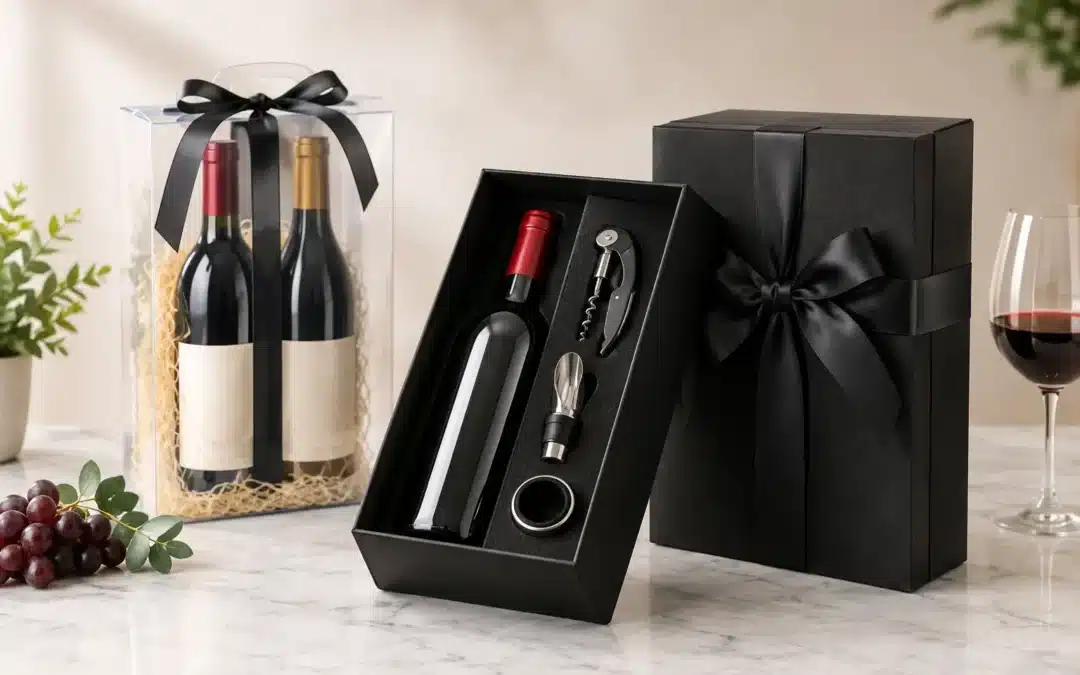
A bottle of wine on its own is a familiar gift. Add the right glassware and presentation box, and it becomes a set with a clear purpose: a settlement gift, a winery promotion, a wedding thank-you, a corporate Christmas gift or a retail-ready hamper. To build wine bottle gift sets successfully, start with the recipient experience, then work backwards to the packaging, glassware and ordering requirements.
For business buyers, the difference is not simply visual. A well-planned set is easier to merchandise, safer to transport and more likely to feel worth its selling price. For event planners and promotional buyers, it also needs to be practical to assemble at volume without creating delays or breakages.
Start with the occasion, not the box
The strongest gift sets have one clear use case. A premium red wine paired with two stemmed glasses suits an anniversary, settlement or executive gift. A sparkling wine bottle with champagne flutes works well for weddings, launches and milestone events. A local wine with stemless glasses can feel more relaxed for staff recognition, cellar door sales or holiday gifting.
This decision affects everything that follows. Formal occasions generally suit a refined black card stock presentation, while a clear transparent box can be an effective option when the glass shape, decoration or branded contents should be visible before opening. Neither format is automatically better. It depends on whether the priority is a classic gift finish or immediate product visibility.
Before selecting components, confirm four practical points:
- who will receive the set and what the occasion calls for
- whether the set is being sold, gifted or used as a promotional item
- how many sets need to be assembled and by what date
- whether the bottle, glasses and packaging will travel together or be packed separately
That last point matters. Glassware packaging should be selected to suit the glassware dimensions and protect it properly. If the wine bottle is to be included in one complete presentation pack, the outer packaging needs enough space, structure and internal support for every component. For larger quantities, a tailored solution may be the most efficient way to create a neat, repeatable finished set.
Choose glassware that matches the wine and the budget
Glassware gives a wine bottle gift set its lasting value. The bottle will eventually be opened, but the glasses remain. That makes the selection an important part of how recipients remember the gift.
Stemmed wine glasses are a natural choice for more traditional wine gifting and formal functions. They create height and a more premium look, but they also need careful sizing and protection. Stemless wine glasses offer a contemporary, versatile alternative that is often easier to handle and pack. They can suit picnics, casual entertaining, branded merchandise and high-volume corporate gifting particularly well.
A two-glass set usually has the broadest appeal, particularly for couples, clients and settlement gifts. One-glass sets can be more cost-effective for large staff events, winery promotions or branded campaigns. If the budget is tight, spend carefully on the components that recipients will notice first: good-quality glassware, a clean presentation box and a tidy, secure arrangement.
Avoid trying to include too many extras just because the box has room. Corkscrews, snacks, printed cards and small accessories can add value when they support the story of the gift. They can also make a set feel crowded, increase assembly time and complicate freight. A bottle and pair of glasses, presented properly, is often enough.
Build wine bottle gift sets around fit and protection
Presentation only works if the products arrive in one piece. Wine glasses, champagne flutes, decanters and carafes all have different proportions, so a box that suits one item may not suit another. Measure the widest point, overall height and base of each glass before ordering packaging. Do not rely only on a product description or a similar-looking sample.
For ready-made glassware packaging, allow for clearance around the glass and consider how it will be secured inside the box. A box that is too loose can allow movement during handling. One that is too tight can be difficult to assemble and may place pressure on delicate rims, stems or bases.
Black cardboard boxes are a dependable choice when you want a professional, economical presentation for wine glasses, beer glasses, tumblers or spirit glasses. They keep the focus on the gifting moment and can suit corporate orders, retailers and event buyers looking for a polished finish without unnecessary complexity.
Clear PVC or PET boxes have a different role. They allow customers or recipients to see the glassware, making them useful for retail display, wedding favours, promotional merchandise and gift sets where the printed glass or distinctive shape is part of the appeal. Transparent packaging should still be cleanly sized and carefully assembled, as every detail is visible.
If you are pairing glasses with a bottle supplied by another business, test the full set early. Place the actual items together, not substitutes, and check the overall height, weight distribution and handling process. This simple step can prevent an attractive concept from becoming difficult to pack on the day.
When custom packaging is worth considering
Custom-made packaging is generally most suitable when order volumes are larger, the glassware is unusually shaped, or the gift set needs a specific configuration. It can also make sense for organisations building a branded promotion that will be repeated across multiple locations or campaigns.
The trade-off is planning time. Custom work requires final dimensions, quantities and a clear production schedule. Ready-made boxes are often the faster option for standard glasses and shorter lead times. A practical approach is to use standard black or clear boxes for immediate needs, then move to a tailored format once the gift set has proven itself or annual volumes justify it.
Make the presentation easy to assemble at scale
A gift set may look simple in a boardroom sample, but large-scale assembly can quickly become labour-intensive. Corporate marketing teams, wineries, retailers and event organisers should consider who is putting the sets together and where. A packaging format that requires extensive folding, taping or adjustment may not be the best choice for hundreds of units.
Keep the assembly sequence straightforward. Have the glasses checked and cleaned first, prepare any branded inserts or cards, then pack each component in the same order. Where wine bottles are being added separately, establish a repeatable method for positioning the bottle beside or within the final outer gift arrangement. Consistency makes finished sets look more professional and helps reduce mistakes.
It is also worth ordering a little extra packaging. Minor damage, last-minute guest additions and packing errors are common on event and gifting projects. Spare boxes provide useful insurance, especially when the set needs to be completed by a fixed wedding date, campaign launch or Christmas dispatch deadline.
Use branding with restraint
Branded gift sets can create a strong connection between the recipient and your business, particularly when the glassware carries a logo or event design. The packaging should support that branding rather than compete with it.
A black box can give branded glasses a smart, premium frame. A clear box can put the print, colour or shape on show. If a bottle has an eye-catching label, it may be better to let that become the visual feature and keep accompanying packaging understated.
For corporate gifts, include a concise message card that explains why the recipient is receiving the set. For winery promotions, a tasting note or food-pairing suggestion can turn a standard gift into a more considered experience. Keep printed extras easy to read and relevant to the wine. A long company brochure rarely improves the moment.
Plan quantities and turnaround before committing
Packaging decisions are often left until the final stage of a gift project, when bottles and glassware have already been ordered. That can limit your options. Confirm packaging availability as soon as the glassware selection is known, particularly for seasonal promotions, major events and end-of-year gifting.
For standard glassware packaging, ready-made options can simplify ordering and keep costs under control. For higher-volume projects, request a quote with the glass dimensions, quantity, intended use and required delivery date. The clearer the brief, the easier it is to recommend a practical option that suits both the presentation and the budget.
WineBox supplies black cardboard and clear transparent glassware boxes for presentation-ready gifting, with tailored options available for larger orders. Whether you are preparing a small run of settlement gifts or a substantial promotional campaign, packaging should make the job easier, not add another logistical problem.
A thoughtful wine bottle gift set does not need to be overdesigned. Choose glassware people will use, package it to suit the occasion, and allow enough time to test the finished arrangement before the main order is assembled. That is how a simple bottle-and-glass idea becomes a gift recipients are pleased to keep.