
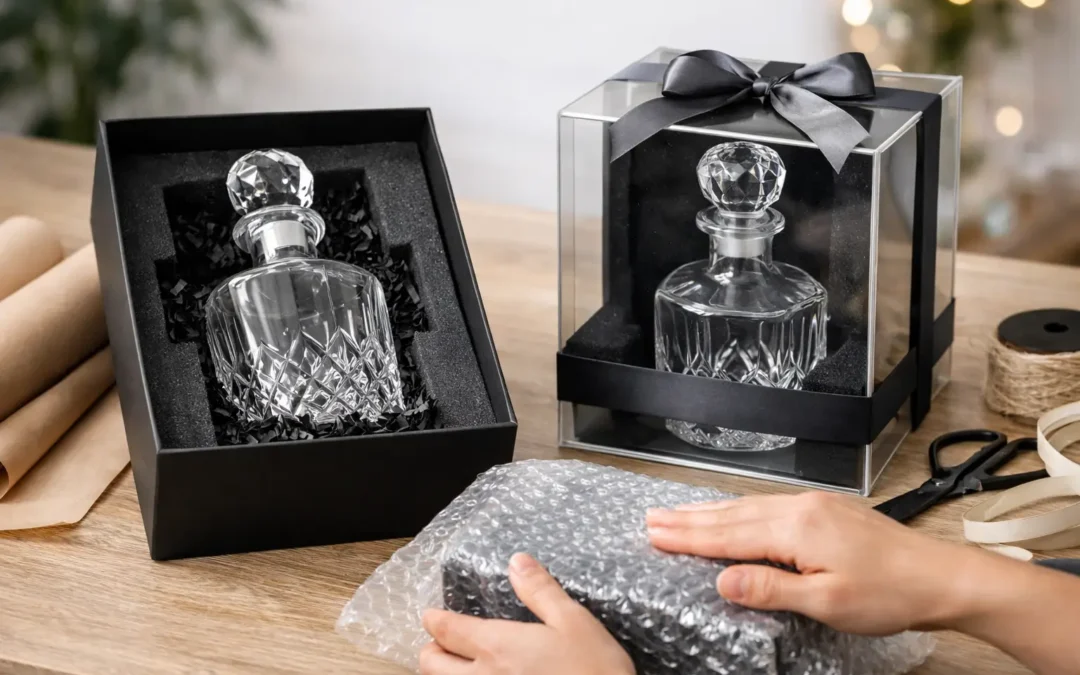
A decanter can look exceptional on a shelf, in a corporate gift set or at a wedding table, but its broad base, narrow neck and often weighty stopper make it one of the more demanding glassware items to pack. Knowing how to package decanters safely means protecting the glass from movement while giving the finished gift a professional presentation.
For retailers, wineries, event planners and promotional buyers, the right packaging does more than reduce breakages. It helps the recipient see the value in the gift before they even lift the lid. The key is to match the box, internal protection and transport method to the decanter’s actual shape, not simply its height.
Start with the decanter’s measurements
Measure the decanter at its widest point, its full height including the stopper, and the diameter of the base. Do not rely on a product description or assume that two decanters with the same capacity will fit the same box. A wide whisky decanter, for example, needs a different internal footprint from a tall wine decanter with a long neck.
Allow enough room for protective material around every side, especially at the base and neck. The decanter should not be squeezed hard against the box walls, but it also should not have enough space to slide from side to side. This balance is what prevents impact damage during handling.
If you are packing a decanter with matching glasses, measure the complete arrangement before choosing packaging. A set can look compact on a bench yet require extra clearance once each piece is wrapped. Planning the layout first avoids a last-minute box that is either too tight or unnecessarily oversized.
Choose a box that supports the gift and the journey
A good decanter box must suit its intended use. For a counter display, presentation can be the priority. For courier delivery, the outer carton and internal protection need to take more of the load. In many cases, you need both: a polished gift box inside a sturdier shipping carton.
Black cardboard glassware boxes offer a smart, versatile finish for retail gifts, corporate promotions and event packs. They provide a clean background for labels, ribbons, stickers or branded sleeves, and work particularly well when you want the decanter to feel considered rather than over-packaged.
Clear PVC or PET boxes are useful when the shape and finish of the decanter are part of the sale. They allow customers to see the product without opening the pack, which can be valuable for retail displays, wedding favours and curated gift sets. However, transparent packaging does not replace internal protection. The decanter still needs to be held securely so it cannot shift or knock against the plastic.
For larger quantities or unusually shaped glassware, custom-made packaging may be the more efficient option. It can reduce packing time, improve consistency across every unit and give branded merchandise a more premium result. It is particularly worthwhile when a business is producing repeat gift sets or promotional campaigns at volume.
Avoid the oversized-box trap
Choosing the biggest available box can feel safer, but excess space creates a new risk. A decanter that moves inside its packaging can gain momentum and strike the walls of the box, particularly when parcels are stacked, carried or transported by courier.
The better approach is a close-fitting box with enough room for cushioning. If a larger box is unavoidable, use appropriately placed protective material to fill the empty areas and keep the glassware centred.
Protect the stopper, neck and base first
Decanters rarely break in the middle. The vulnerable areas are usually the stopper, the thin neck, the rim and the base corners. Protecting these points first makes the whole package more secure.
Wrap the stopper separately if it is removable. This prevents it from rubbing against the decanter or putting pressure on the neck during transport. If the stopper is packed with the decanter, place a protective layer between the two pieces and make sure it cannot roll freely inside the box.
The neck needs gentle but firm support. Use soft wrapping material around the glass and add extra padding where the neck meets the body. This is often the narrowest and most exposed part of the piece. Avoid taping anything directly to the glass, as adhesive can leave residue or make unpacking frustrating for the recipient.
At the base, use enough cushioning to absorb a bump without making the decanter sit unevenly. A decanter that tilts inside the box can place stress on the neck or stopper, even when it looks well padded at first glance.
Build a secure internal pack
Once the decanter is wrapped, place it in the centre of the box and check for movement before sealing. A simple test is to close the box and gently tilt it in several directions. You should not hear glass shifting or feel the decanter slide.
For presentation-focused packs, neatly folded tissue or other suitable soft protective material can create a polished finish while adding a light layer of cushioning. For transit-ready packs, use more substantial protective materials and ensure they fill the voids around the wrapped decanter. The goal is not to pack as much material as possible. It is to stop movement and protect impact points.
If you are packing a bottle alongside a decanter, keep each item separated. Glass-to-glass contact is a common cause of damage in gift sets. A divider, fitted insert or a clearly defined compartment gives each component its own space and helps the set arrive looking as intended.
For decanter-and-glass sets, position heavier pieces low in the pack and avoid placing a loose stopper above the glasses. The internal layout should remain stable if the box is briefly turned on its side.
How to package decanters safely for delivery
Gift packaging protects the presentation. Shipping packaging protects the gift box and its contents from the realities of transport. When decanters are being sent by courier or freight, place the finished presentation box inside a correctly sized outer carton with protective space around it.
The outer carton should be strong enough for its load and sealed securely along its opening. Keep the presentation box centred, then use protective packing material around the outside so it cannot move within the carton. This two-layer approach is especially useful for online orders, interstate deliveries and corporate gifts being sent to multiple recipients.
Do not assume a fragile label is enough. It may encourage care, but it cannot control how every parcel is handled. The pack itself needs to withstand ordinary movement, stacking and occasional knocks.
Before sending a larger order, test one completed pack. Lift it, gently tilt it, place it in the outer carton and repeat the movement check. For regular campaigns, keeping a sample pack as a reference helps staff pack each order consistently and reduces avoidable variations.
Match the finish to the occasion
Safe packaging should still look appropriate for the recipient and event. A black cardboard box can suit a premium wine decanter, a staff-recognition gift or a branded whisky set. Clear packaging can make sense where the decanter’s design, etched logo or included glassware needs to be visible at point of sale.
For weddings and events, consider the practical details as well as the visual ones. Will guests carry the gifts home? Will packs be stacked on a table? Does each decanter need a name card, ribbon or branded message? Leave enough room for these finishing touches without compromising the protective fit.
For business buyers, consistency matters just as much as appearance. Using the same packaging format across a campaign makes fulfilment easier, supports a professional brand image and gives recipients a reliable unboxing experience. WineBox can assist with ready-made black or clear glassware boxes, as well as tailored packaging for larger-volume requirements.
A decanter is often chosen because it feels generous and lasting. Pack it with the same care: measure accurately, keep every component still, and select packaging that looks right for the occasion as well as strong enough for the trip.