
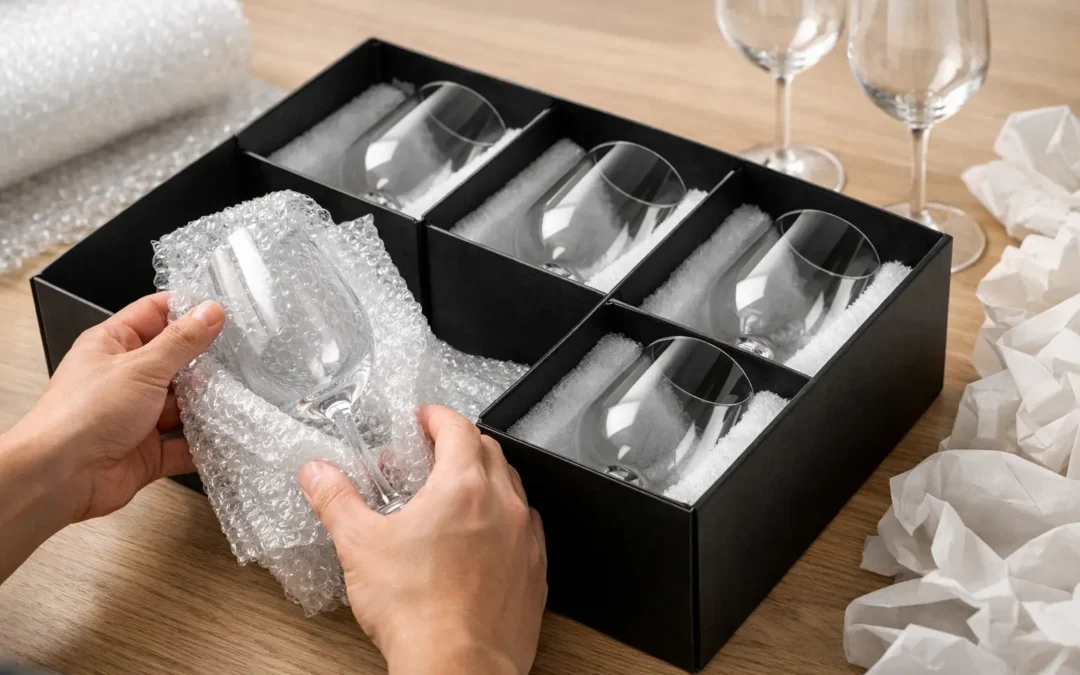
A wine glass can look premium on the shelf or at an event table, then lose all impact the moment it arrives chipped, dusty or awkwardly packed. That is why knowing how to package wine glasses properly matters just as much as choosing the glass itself. For retailers, event buyers and gift businesses, good packaging does two jobs at once – it protects the product and lifts the perceived value.
If you are packing wine glasses for sale, gifting, wedding favours or a bottle-and-glass set, the right approach depends on the glass shape, the presentation standard you need and how the item will be handled. There is no single box that suits every job. A stemless wine glass for a corporate gift pack has different needs from a tall stemmed glass going into a wedding favour or a retail display.
How to package wine glasses for the right result
The first decision is not wrapping material. It is purpose. Are the glasses being handed over in person, displayed in-store, added to a promotional set, or transported by courier? The answer changes the level of protection and the style of packaging required.
For simple gift presentation, a well-fitted card stock box or a clear plastic box is often enough, provided the glass sits securely and does not rattle. For retail or event use, presentation usually carries more weight, so visibility, finish and branding potential matter more. For freight or bulk movement, structure becomes the priority, because even an attractive box will fail if it is too loose or too light for the journey.
This is where many buyers overcomplicate the process. Packaging works best when it matches the use case. Too much material can look clumsy and increase packing time. Too little protection can lead to breakage, returns and a poor customer experience.
Start with the glass dimensions
Before choosing any packaging, measure the height, bowl width and base diameter of the glass. Do not rely on a general description such as “standard wine glass”. Sizes vary more than most people expect, and a box that is a few millimetres too narrow or too tall can create problems straight away.
Stemmed glasses need enough internal room around the bowl and stem without leaving excess space. Stemless glasses are generally easier to pack because they have a lower centre of gravity and fewer fragile points. Even so, a loose fit is still a risk. The goal is a snug, professional fit that supports the shape rather than squeezing it.
If you are packaging multiple glass styles across one campaign or product line, consistency matters. Standardising your box format where possible can simplify ordering and packing, but only if the fit still protects the glass adequately.
Choosing the best box for wine glasses
For most gifting and presentation applications, two packaging styles do the heavy lifting: black cardboard boxes and clear PVC or PET boxes. Each has a different job.
Black cardboard boxes suit buyers who want a neat, premium presentation without overthinking the styling. They work particularly well for corporate gifts, winery merchandise, retail packs and curated sets that pair a wine glass with another item. The matte or clean card finish gives the product a more polished feel and can help the glass inside feel more substantial.
Clear boxes are ideal when the glass itself is part of the visual appeal. If the glass has printing, a custom design, event branding or an unusual shape, visibility can do a lot of the selling for you. They are popular for wedding favours, event gifts and promotional packs where instant presentation matters.
Neither format is automatically better. It depends on whether you want conceal-and-reveal presentation or immediate product visibility. That trade-off is worth thinking through early, especially if you are ordering at volume.
When inserts or internal support matter
A box alone does not always solve movement. If the glass can shift inside the pack, especially around the stem or rim, internal support becomes important.
For some applications, tissue or soft wrap will do the job. For others, especially premium gifting or transport-heavy jobs, a more structured insert is the better option. The right internal support keeps the glass centred, improves presentation when the box is opened, and reduces the chance of impact damage.
This matters even more when packaging a glass with a bottle, decanter or accessory. Mixed-item sets often fail because the components move against each other. A neat outer box means very little if the contents knock together in transit.
Wrapping and protecting the glass inside the box
Once the box size is sorted, protection becomes straightforward. Start by making sure the glass is clean and completely dry. Packing a glass with fingerprints, lint or moisture undercuts the whole point of premium presentation.
Wrap the glass according to how exposed it will be during handling. For a hand-delivered gift pack, a lighter touch may be enough. For transport, use soft wrap that protects the rim, stem and base without creating bulky folds that make the box hard to close.
Avoid overstuffing. Too much wrap can place pressure on the bowl or stem and make the glass harder to seat securely. It can also make the final presentation feel cheap or rushed. The best packaging feels intentional, not forced.
For clear boxes, be especially careful with wrap choice. Materials that look fine in a card box can appear messy through transparent packaging. If presentation is the priority, keep internal protection tidy and minimal while still securing the glass.
How to package wine glasses for gifting and retail display
Gifting and retail are close cousins, but they are not identical. Gift packaging needs to feel ready to present. Retail packaging needs to catch attention quickly and survive repeated handling.
For gifting, the box should feel polished from the first look. A black card stock box often works well because it gives the item a finished, occasion-ready feel. This is particularly useful for corporate merchandise, settlement gifts, winery packs and festive promotions where buyers want something that looks sorted without needing extra wrapping.
For retail display, clear packaging can be a stronger choice if the glass design is part of the sale. Printed event glasses, branded stemware and decorative shapes benefit from visibility. Customers can assess the product immediately, which can improve confidence and reduce handling.
If you are supplying glassware for events or promotions, think about pack speed too. A packaging option that looks excellent but takes too long to assemble can create headaches when deadlines tighten. Practicality counts.
Single-glass packs versus sets
Single-glass packaging is often the cleanest choice for favours, promotions and impulse gift purchases. It is simpler to store, easier to assemble and usually more cost-effective.
Sets can create a higher perceived value, especially when paired with a bottle or offered as a premium gift. But set packaging needs better internal planning. Weight distribution, box strength and the way items sit together all become more important. If one piece shifts, the whole set can feel unstable.
That is why many businesses choose ready-made box formats for standard single-glass jobs and move to custom solutions when the product set becomes more complex or the order volume justifies it.
Transport, storage and order volume considerations
If your glasses are being packed for courier dispatch, warehouse storage or event bump-in, outer presentation is only one part of the equation. You also need packaging that works operationally.
Flat-packed or easy-assemble boxes can save space and labour, especially for larger runs. Consistent box sizing can also make stock handling simpler for retailers, event teams and promotional product businesses. These are not glamorous details, but they affect cost, speed and packing accuracy.
For larger orders, custom packaging can make commercial sense. It can improve fit, support branding and streamline packing if you are repeating the same gift format across a campaign, product launch or event season. For smaller runs, ready-made options are often the more efficient choice because they keep costs controlled and lead times shorter.
A dependable supplier should be able to guide that decision based on the glass style, the intended use and the quantity required, rather than pushing one packaging format for every job.
Common mistakes to avoid when packaging wine glasses
Most breakage and presentation issues come back to a few avoidable errors. The first is choosing a box by guesswork rather than actual measurement. The second is focusing only on appearance and forgetting how the product will travel or be handled. The third is using too much loose material, which can make the package look untidy and still fail to stop movement.
Another common issue is leaving packaging decisions until the end of the project. If the glass, bottle, branding and event date are already locked in, your options can narrow fast. Packaging works best when it is treated as part of the product plan, not an afterthought.
For businesses ordering in Australia, turnaround time can also matter more than expected. Events, promotions and seasonal gifting windows do not leave much room for delays, so choosing a practical packaging solution early can save a lot of pressure later.
If you need your glassware to look sharp, travel safely and feel worth the spend, the best packaging is usually the one that solves protection and presentation in the same move. Get that balance right, and the glass arrives looking like it was always meant to be given.