
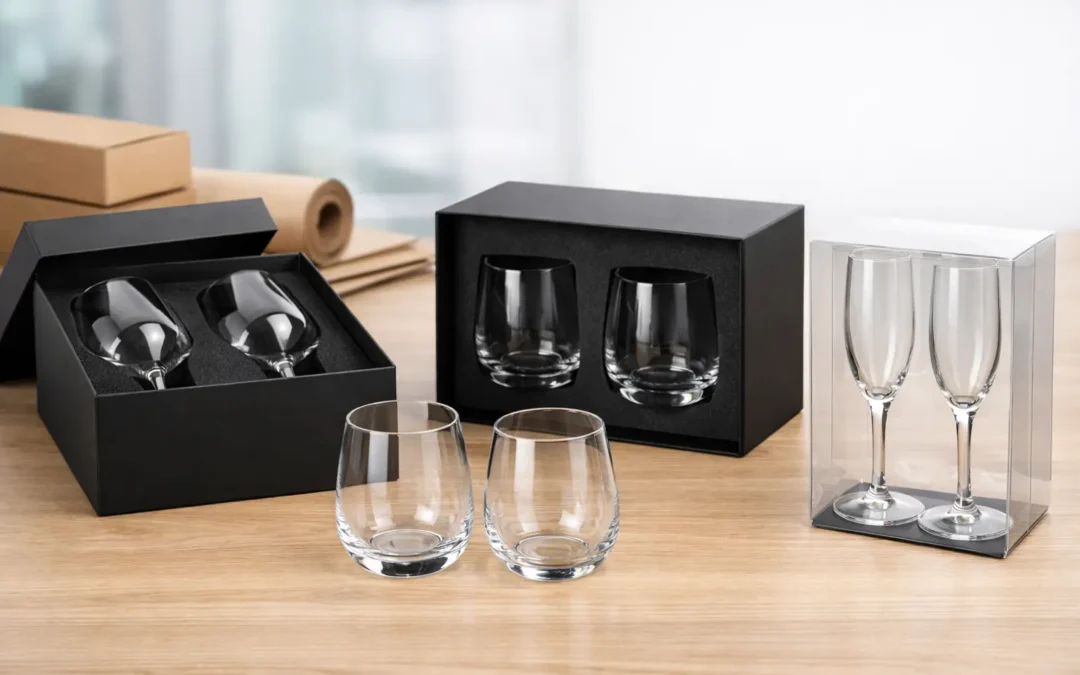
A branded wine glass can look like a premium corporate gift, a wedding keepsake or a retail-ready product – until it is handed over in a plain carton. Custom packaging minimums are often the first practical question buyers face when they want a box that protects glassware and presents it properly. The right answer depends on the box style, printing requirements, glass size and how many finished sets you need.
For a small run, a ready-made black cardboard or clear transparent box can achieve a polished result without the cost and lead time of a fully custom production run. For larger promotional, retail or event orders, custom-made packaging can make commercial sense by bringing your branding, dimensions and product presentation into one tailored solution.
Why custom packaging minimums exist
Custom boxes are made to a specific brief. That may include a particular size for a stemmed wine glass, an insert for two beer glasses, a printed logo, a special finish or room for a glass-and-bottle gift set. Before production begins, the manufacturer needs to set up materials, cutting tools, print files and assembly processes. Those fixed costs are spread across the total order quantity.
This is why a custom box for 50 units can cost substantially more per unit than the same box ordered in a larger volume. It is not simply a matter of ordering less cardboard or plastic. The production work required to create a tailored packaging format still needs to be completed.
Minimums also help maintain consistency. When boxes are produced in a viable quantity, colours, folds, inserts and sizing can be controlled across the run. That matters when your packaging is part of a corporate campaign, a retailer display or an event where every guest should receive the same quality presentation.
What affects custom packaging minimums?
There is no single minimum that suits every project. A simple custom-sized black cardboard box may have a different minimum from a printed box with a window, while a transparent PET or PVC gift box may be influenced by its dimensions and closure style. The more specialised the requirement, the more likely the viable production quantity will increase.
Box size and glassware configuration
Glassware is not one-size-fits-all. A compact shot glass pack requires very different proportions from a tall champagne flute box or a decanter presentation box. A single tumbler box is generally simpler than packaging designed for a pair of wine glasses, or a set containing glasses and a bottle.
Custom sizing improves fit and presentation, but it also means the packaging is made specifically for that product. Be ready to provide accurate measurements for the glassware, including height, widest point and any packaging components that need to sit alongside it. For stemmed glassware, the bowl, stem and base all need suitable clearance.
Printing and branding requirements
A plain custom box is one thing. Adding a logo, full-colour artwork, foil details, internal printing or a defined brand colour creates more production steps. These features can lift the perceived value of your gift, particularly for client appreciation packs, wine club offers and promotional merchandise, but they can also affect the minimum order quantity and unit price.
For some projects, a professionally applied label or branded sleeve on a ready-made box is the more practical middle ground. It gives you a branded finish while avoiding the commitment required for a fully printed custom box. The best option depends on whether the packaging is for a one-off event, an ongoing retail range or repeat corporate gifting.
Inserts and protection
A box should do more than look good. It needs to support the glassware through handling, transport and presentation. Inserts are especially valuable for twin packs, glass-and-bottle combinations, decanters and shapes that need additional stability.
Custom inserts can add to minimums because they require their own design and production setup. However, they may be worthwhile when breakage risk is high or when the product needs to look carefully arranged the moment the recipient opens the box. For premium gifting, that first impression is part of the product value.
Material and finish
Black card stock boxes offer a classic, versatile look that works across wine glasses, beer glasses, tumblers and spirits gifts. Clear transparent packaging puts the glassware on display and can be a strong choice for retail shelves, wedding favours or branded glasses where the product itself should be visible.
The material you choose should suit the occasion, the transport method and the desired price point. A transparent box may help customers see what they are buying, while a black box can create a more gift-focused reveal. Neither is automatically better. The right format is the one that protects the glassware and supports the way it will be sold or presented.
When ready-made boxes are the smarter option
Not every order needs custom manufacture. If you need packaging quickly, have a modest quantity or are testing a new gift set, ready-made boxes can reduce complexity. They are particularly useful for businesses preparing seasonal gifts, wineries assembling small promotional packs, or event planners packaging favours close to the event date.
Standard black cardboard and clear transparent boxes provide a professional base without requiring you to finalise custom artwork, approve a production sample or commit to a large quantity. You can still create a considered result by matching the box to the glass shape, adding tissue or an insert where suitable, and applying a branded label if required.
This approach can also be useful when stock levels are uncertain. A retailer launching a new range of etched whisky glasses, for example, may prefer to trial presentation packaging first. Once the product proves popular, moving to a custom box for future volumes becomes a more confident decision.
How to plan your order before requesting a quote
The clearest quotes come from a clear brief. Start by confirming the number of finished gift sets you need, rather than just the number of boxes. Allow for display samples, replacement units and any sets intended for photography or sales meetings. If your order includes multiple glass styles, treat each packaging format as its own requirement.
Next, identify what the box needs to do. Is it primarily a gift box handed directly to clients? Is it going onto a retail shelf? Will it be packed into another carton for freight? A box for a wedding table may prioritise visual appeal, while a box being sent around Australia needs more attention to protection and outer-carton packing.
You should also have the glassware dimensions and weight available, along with photographs if the shape is unusual. If the set includes a wine bottle, carafe or printed promotional item, include those measurements too. Small differences in height or diameter can change whether a standard box will fit safely.
Finally, separate the must-haves from the nice-to-haves. Your must-haves may be a black box, a secure fit and delivery before a campaign date. Nice-to-haves could include foil stamping, full internal printing or a custom window. This helps you compare options honestly if budget or minimum quantities become a constraint.
Balancing unit cost, storage and presentation
A larger custom run often lowers the box cost per unit, but ordering more is only worthwhile if you can store and use the packaging. Boxes take up space, even when supplied flat-packed, and designs tied to a specific campaign or date can become difficult to reuse.
For repeat programs, such as annual corporate gifting or a permanent retail product, ordering at a higher quantity may deliver better overall value. For a single wedding, a limited launch or a short-term promotion, a standard box with simple branding may be the more sensible commercial choice.
It is also worth considering the value of the item inside. A premium decanter, a set of engraved champagne flutes or a branded wine-glass-and-bottle pack benefits from packaging that reflects the quality of the gift. For lower-value giveaway glassware, a clean, economical box may be exactly what the project needs. Good packaging should suit the product rather than overpower it.
Get the custom solution that fits the job
The best packaging decision is not always the most elaborate one. It is the option that gives your glassware the right protection, presentation and brand impact at a quantity you can use confidently. WineBox can help buyers compare ready-made black or transparent glassware boxes with custom-made options for larger orders, so the final result is practical as well as polished.
Bring your glass measurements, required quantity, branding idea and deadline to the conversation. With those details in place, it becomes much easier to choose packaging that makes every glassware gift feel ready to give.