
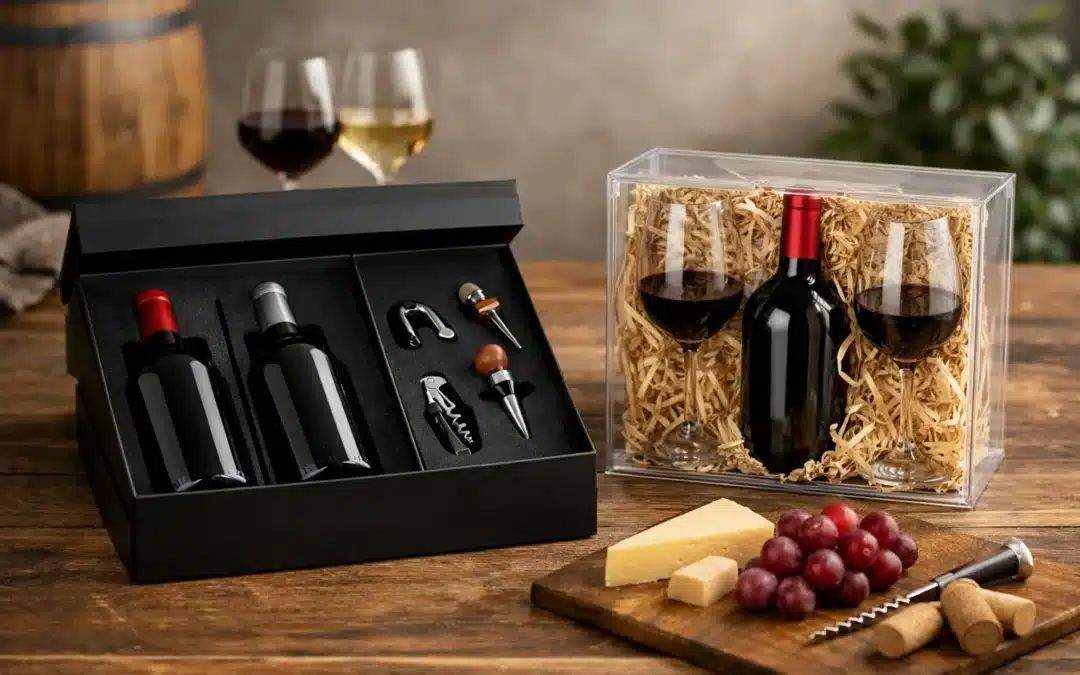
A bottle with a pair of quality glasses can be a memorable cellar-door purchase, corporate thank-you or wedding gift. Without the right winery gift set packaging, however, even premium glassware can look like an afterthought. The box needs to protect fragile pieces, present the set professionally and make the gift easy to carry, display and hand over.
For wineries, retailers, event organisers and promotional buyers, packaging is part of the product experience. It signals care before the recipient opens the box. It also helps staff prepare gifts efficiently when orders need to be assembled in volume.
What winery gift set packaging needs to do
A good gift set box has more than one job. First, it must suit the dimensions and shape of the glassware. Stemmed wine glasses, stemless glasses, beer glasses, tumblers, champagne flutes, shot glasses and decanters all require different considerations around height, width and stability.
Second, it must make the set feel considered. A clean black card stock box gives a refined, understated finish that works across many wine styles and corporate occasions. Clear PVC or PET packaging has a different strength: it puts the glassware on show. This can be particularly effective for retail displays, branded glassware and wedding favours where the product itself is the visual feature.
Finally, the packaging needs to work in the real world. It should be straightforward for staff to assemble, practical to store before use and appropriate for the quantity being ordered. A beautiful box that is difficult to pack or poorly matched to the glasses creates extra handling time and increases the chance of breakage.
Match the box to the gift set
The best format depends on what the recipient will see when they receive the gift. A winery might pair branded stemless wine glasses with a bottle for a membership reward, while a corporate buyer may be preparing two whisky tumblers for an end-of-year campaign. These are both glassware gifts, but their presentation requirements are not identical.
Black cardboard boxes for a polished finish
Black cardboard glassware boxes are a dependable choice when the goal is a premium, versatile look at a competitive price. They suit glassware being given with a bottle, sold at a cellar door, included in a hamper or used as part of a corporate gift pack. The neutral colour also works well when the bottle label, ribbon, card or branded sleeve provides the main visual identity.
Cardboard is often the better option when gifts are packed in batches and need a more traditional presentation. It can help reduce visual clutter around a busy branded glass or detailed label. For buyers seeking an economical ready-made packaging option, standard black boxes offer a practical starting point without requiring a full custom packaging project.
Clear PVC or PET boxes for product visibility
Transparent boxes are designed for occasions where seeing the glassware is part of the appeal. They allow customers to view a logo, etched design, coloured print or glass shape before opening the packaging. That makes them useful for retail merchandising, promotional products and event gifts where a strong first impression matters.
Clear PVC or PET boxes can also simplify product identification in storage and at point of sale. The trade-off is that every element inside is visible. Glasses need to be clean, consistently positioned and suitably protected so the finished pack looks intentional rather than improvised.
When custom packaging is the right call
Ready-made boxes are efficient for standard glassware sizes and shorter lead-time requirements. But some winery gift sets need a tailored solution, particularly when a box must accommodate unusual glass shapes, larger quantities or a specific presentation concept.
Custom-made packaging can be worthwhile for larger volumes, recurring promotions or branded programs where consistency matters. It may allow for tailored dimensions, printed branding or a configuration that better supports a bottle-and-glass concept. Before committing, check the full packed dimensions, including any bottle, inserts, tissue, promotional card or other inclusions. A box that fits the glasses perfectly may not suit the complete gift set.
Start with the glassware, not the artwork
Packaging decisions are often delayed until the glasses have been chosen, printed and delivered. That can create an avoidable problem if the finished items are taller, wider or more delicate than expected. The safest approach is to confirm packaging early, using the actual glass dimensions rather than a general product description.
Measure the widest point, total height and, for stemmed glasses, the base diameter and bowl profile. If glasses will be packed as a pair, allow for the way they sit beside one another and the protection needed to prevent contact. Decanters and carafes deserve extra care because their shapes can be wider at the base or body than they appear in a product photo.
If the package will sit alongside a bottle in a larger gift presentation, think about the full unboxing sequence. The glassware box may be a polished component within a hamper, presentation carton or cellar-door bundle rather than the outer packaging for every item. This approach can give staff more flexibility while keeping the fragile glassware properly presented.
Build protection into the presentation
Glassware packaging should never rely on appearance alone. Packaging needs to help keep glasses separated, stable and protected during handling. This is especially relevant for freight between venues, corporate gift assembly, wedding setup or retail stock transfers.
The right level of protection depends on the journey. A gift handed over at a winery or event may have different requirements from one being packed into a delivery carton for interstate distribution. Outer shipping cartons, internal cushioning and careful packing procedures may all be needed beyond the gift box itself.
For clear boxes, consider how protective material will look through the packaging. For black boxes, the focus is usually on a neat fit and a tidy opening experience. In either case, avoid overpacking. Excess inserts, loose filler or a box that is far too large can make a premium set feel less considered.
Consider the buying occasion
A single packaging style rarely suits every campaign. Corporate buyers often value a clean, brand-neutral box that can work with changing logos, event themes and recipient lists. Wineries may prioritise a presentation that complements their label and supports cellar-door sales. Wedding planners tend to need consistency across a large number of favours, with efficient assembly and a reliable finish.
Promotional product resellers also need packaging that makes quoting and fulfilment simpler. A ready-made box can keep a smaller order moving quickly. For a national campaign or a larger branded run, custom packaging may provide more impact and a more tailored result.
Budget should be considered alongside perceived value. The lowest-cost box is not always the most economical option if it slows packing, looks unsuitable for the product or requires additional materials to make the set presentable. Equally, highly customised packaging is not always necessary for a one-off small run. The right answer depends on volume, lead time, glassware type and the standard of presentation expected by the customer.
Ordering details that prevent delays
When requesting a packaging quote, provide the glass type, dimensions, number of pieces per set, required quantity and intended use. It also helps to explain whether the packaging is for retail, corporate gifting, a wedding, a cellar-door sale or a promotional campaign. These details make it easier to identify a suitable standard option or determine whether a custom solution is justified.
Ask about turnaround time early if packaging is tied to an event date, product launch or seasonal gifting period. It is also sensible to allow time for a sample or fit check where the glassware is unusual, printed or sourced separately. A small confirmation step can prevent a large packing issue later.
WineBox supplies black cardboard and clear transparent glassware boxes for a wide range of drinking glasses, decanters and carafes, with custom-made options available for larger orders. The practical benefit is simple: buyers can choose packaging around the actual glassware and gifting occasion, rather than trying to force valuable items into a generic box.
The best gift packaging quietly does its job. It protects the glassware, supports a professional presentation and lets the wine, brand or occasion remain the reason the recipient remembers the gift.